

alb5469873
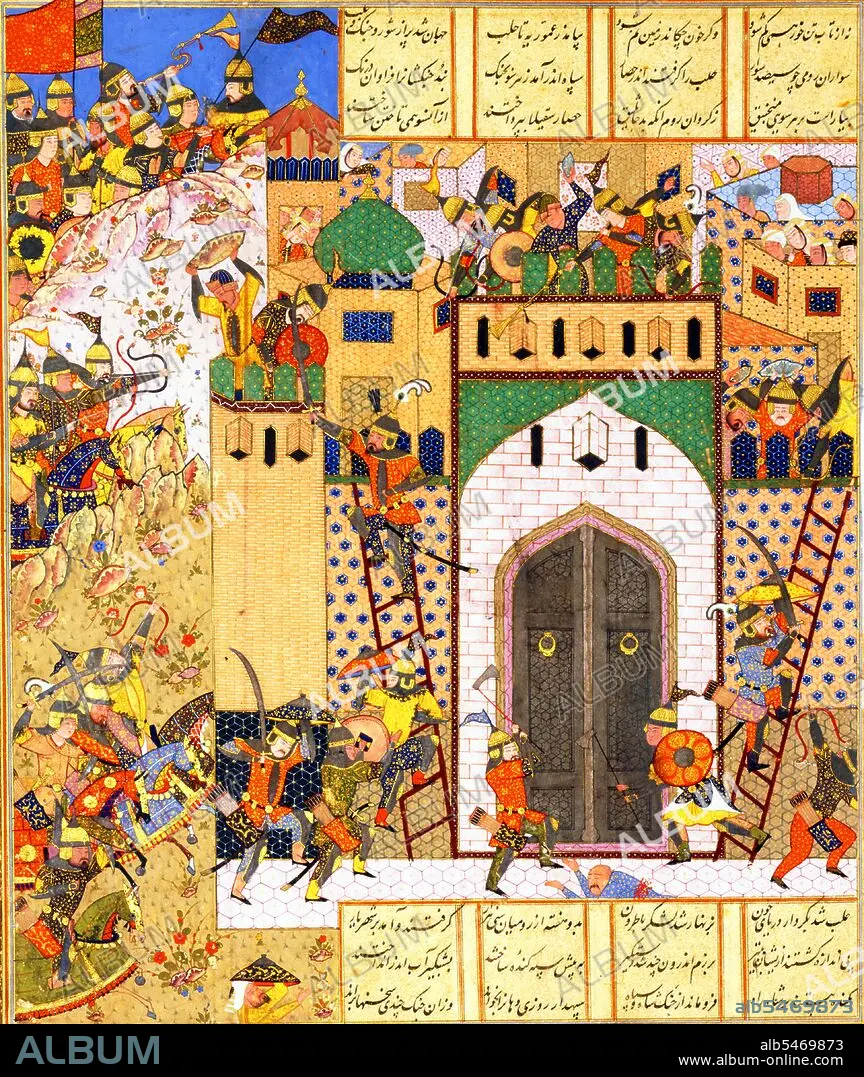
Iran-Persia: Shah Anushirvan Captures the Fortress of Saqila. Miniature from a copy of Firdawsi’s Shahnameh, Shiraz, mid-16th century
| Compartir |
|---|
 Pinterest Pinterest |
 Twitter Twitter |
 Facebook Facebook |
 Copiar enlace Copiar enlace |
 Email Email |
|
Añadir a otro lightbox |
|
Añadir a otro lightbox |


¿Ya tienes cuenta? Iniciar sesión
¿No tienes cuenta? Regístrate
Compra esta imagen.
Selecciona el uso:

Título: Iran-Persia: Shah Anushirvan Captures the Fortress of Saqila. Miniature from a copy of Firdawsi’s Shahnameh, Shiraz, mid-16th century
Descripción: Ver traducción automática
The Shahnameh or Shah-nama (Persian: ??????? Šahnameh, 'The Book of Kings') is a long epic poem written by the Persian poet Ferdowsi between c. 977 and 1010 CE and is the national epic of Iran and related Perso-Iranian cultures. Consisting of some 60,000 verses, the Shahnameh tells the mythical and to some extent the historical past of Greater Iran from the creation of the world until the Islamic conquest of Persia in the 7th century. The work is of central importance in Persian culture, regarded as a literary masterpiece, and definitive of ethno-national cultural identity of Iran. It is also important to the contemporary adherents of Zoroastrianism, in that it traces the historical links between the beginnings of the religion with the death of the last Zoroastrian ruler of Persia during the Muslim conquest.
The Shahnameh or Shah-nama (Persian: ??????? Šahnameh, 'The Book of Kings') is a long epic poem written by the Persian poet Ferdowsi between c. 977 and 1010 CE and is the national epic of Iran and related Perso-Iranian cultures. Consisting of some 60,000 verses, the Shahnameh tells the mythical and to some extent the historical past of Greater Iran from the creation of the world until the Islamic conquest of Persia in the 7th century. The work is of central importance in Persian culture, regarded as a literary masterpiece, and definitive of ethno-national cultural identity of Iran. It is also important to the contemporary adherents of Zoroastrianism, in that it traces the historical links between the beginnings of the religion with the death of the last Zoroastrian ruler of Persia during the Muslim conquest.
Crédito: Album / Pictures From History/Universal Images Group
Autorizaciones: ? Cesión de modelo: No - ? Cesión de propiedad: No
¿Preguntas relacionadas con los derechos?
¿Preguntas relacionadas con los derechos?
Tamaño imagen: 3900 × 4624 px | 51.6 MB
Tamaño impresión: 33.0 × 39.1 cm | 1535.4 × 1820.5 in (300 dpi)
Palabras clave: ART • ARTE • ARTES • ASIA • ASIATICO • BATALLA • CABALLERIA • CABALLO • CABALLOS • CALIGRAFIA • CONFLICTO BELICO • GUERRA • GUERRAS • HISTORIA • IRAN • IRANIO • ISLAM • ISLAMICAS • ISLÁMICO • ISLAMICOS • LITERATO • LITERATURA • LITERATURE • LUCHA • MILITAR • MUSULMAN • MUSULMANA • PERSA • PINTURA • RELIGION • TAMERLAN • TIMUR • WAR
