

alb4594789
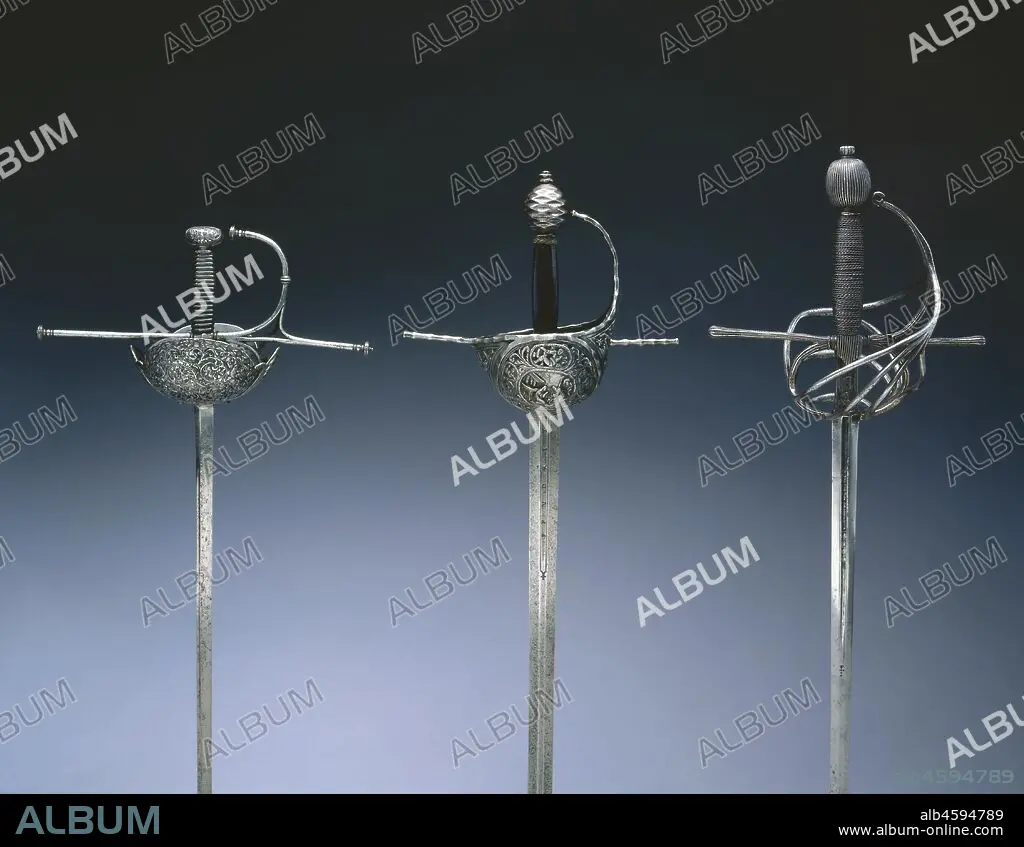
Rapier, c. 1580-1610. Creator: Unknown.
| Compartir |
|---|
 Pinterest Pinterest |
 Twitter Twitter |
 Facebook Facebook |
 Copiar enlace Copiar enlace |
 Email Email |
|
Añadir a otro lightbox |
|
Añadir a otro lightbox |


¿Ya tienes cuenta? Iniciar sesión
¿No tienes cuenta? Regístrate
Compra esta imagen.
Selecciona el uso:

Título: Rapier, c. 1580-1610. Creator: Unknown.
Descripción:
Traducción automática: Estoque, c. 1580-1610. El estoque era una espada que se llevaba con vestimenta civil y se utilizaba en duelos. El término estoque deriva de la palabra francesa del siglo XVI rapière, que a su vez derivó del español espada ropera, o "espada de vestir". El estoque era un arma ligera con una hoja recta de doble filo y puntiaguda que, con el desarrollo del arte de la esgrima en los años 1500 y 1600, gradualmente se volvió más estrecha y liviana, y por lo tanto adecuada solo para estocadas. Con la nueva técnica del manejo de la espada que enfatizaba la punta de la hoja, los protectores de espada se volvieron más complejos para proteger la mano desarmada del duelista. Estas elaboradas guardias frecuentemente estaban decoradas mediante diversas técnicas: cincelado, pavonado, russeting y damasquinado.
Rapier, c. 1580-1610. The rapier was a sword worn with civilian dress and used in duels. The term rapier derives from the 16th-century French word rapière , which in turn derived from the Spanish espada ropera , or "dress sword." The rapier was a light weapon with a straight double-edged and pointed blade that, with the development of the art of fencing in the 1500s and 1600s, gradually became narrower and lighter, and thus suitable for thrusts only. With the new technique of swordplay emphasizing the point of the blade, sword guards became more complex to protect the duelist?s unarmored hand. These elaborate guards were frequently decorated by various techniques?chiseling, bluing, russeting, and damascening.
Crédito: Album / Heritage Art/Heritage Images
Autorizaciones: ? Cesión de modelo: No - ? Cesión de propiedad: No
¿Preguntas relacionadas con los derechos?
¿Preguntas relacionadas con los derechos?
Tamaño imagen: 4508 × 3494 px | 45.1 MB
Tamaño impresión: 38.2 × 29.6 cm | 1774.8 × 1375.6 in (300 dpi)
Palabras clave: ACERO • ARMAS Y ARMADURA
