

alb3842538
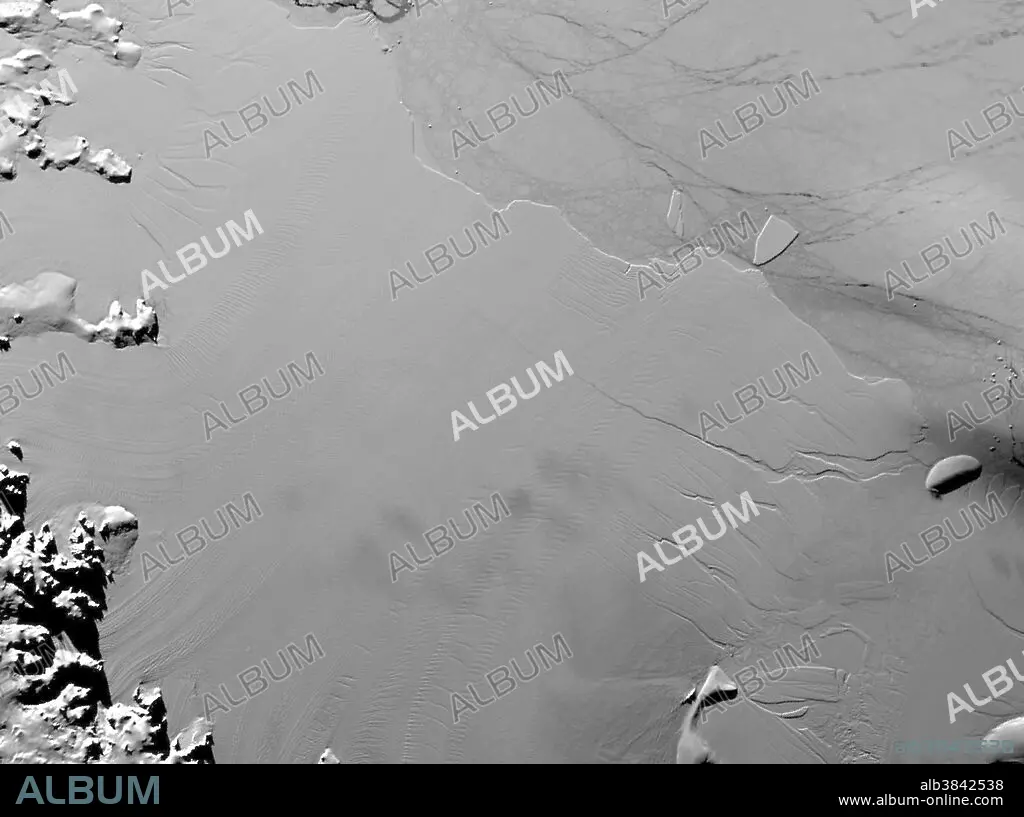
Larsen C Ice Shelf Calving, 4/6/2017
| Compartir |
|---|
 Pinterest Pinterest |
 Twitter Twitter |
 Facebook Facebook |
 Copiar enlace Copiar enlace |
 Email Email |
|
Añadir a otro lightbox |
|
Añadir a otro lightbox |


¿Ya tienes cuenta? Iniciar sesión
¿No tienes cuenta? Regístrate
Compra esta imagen.
Selecciona el uso:

Título: Larsen C Ice Shelf Calving, 4/6/2017
Descripción: Ver traducción automática
Between July 10 and 12, 2017, the Larsen C Ice Shelf in West Antarctica calved one of the largest icebergs in history. The rift in the ice shelf that spawned the trillion-ton iceberg remained relatively dormant until around 2012, when it was observed actively moving through a suture zone in the ice shelf. Suture zones are wide bands of ice that extend from glacier grounding lines (the boundary between a floating ice shelf and ice resting on bedrock) to the sea comprised of a frozen mixture of glacial ice and sea water, traditionally considered to be stabilizing features in ice shelves. This image of the ice shelf is from April 6, 2017. The rift can be seen at center.
Between July 10 and 12, 2017, the Larsen C Ice Shelf in West Antarctica calved one of the largest icebergs in history. The rift in the ice shelf that spawned the trillion-ton iceberg remained relatively dormant until around 2012, when it was observed actively moving through a suture zone in the ice shelf. Suture zones are wide bands of ice that extend from glacier grounding lines (the boundary between a floating ice shelf and ice resting on bedrock) to the sea comprised of a frozen mixture of glacial ice and sea water, traditionally considered to be stabilizing features in ice shelves. This image of the ice shelf is from April 6, 2017. The rift can be seen at center.
Crédito: Album / Science Source / NASA/JPL-Caltech/NOAA/GSFC
Autorizaciones: ? Cesión de modelo: No - ? Cesión de propiedad: No
¿Preguntas relacionadas con los derechos?
¿Preguntas relacionadas con los derechos?
Tamaño imagen: 3585 × 2676 px | 27.4 MB
Tamaño impresión: 30.4 × 22.7 cm | 1411.4 × 1053.5 in (300 dpi)
Palabras clave: 2017 • ACCIDENTE GEOGRAFICO • ACCIDENTES GEOGRÁFICOS • AEREO • ANTÁRTIDA, LA • BANQUISA • BLANCO Y NEGRO • CALENTAMIENTO GLOBAL • CIENCIA • CONGELADO • COSTA • DESCONGELACIÓN • FORMACIONES GEOLÓGICAS • GEOGRAFIA • GEOLOGIA • GEOLOGICO • GLACIAR • HELADO • HIELO • ICEBERG • LITORAL • PAISAJE • PAISAJES • PARIENDO • SATELITE • VISTA AÉREA
