

alb5526854
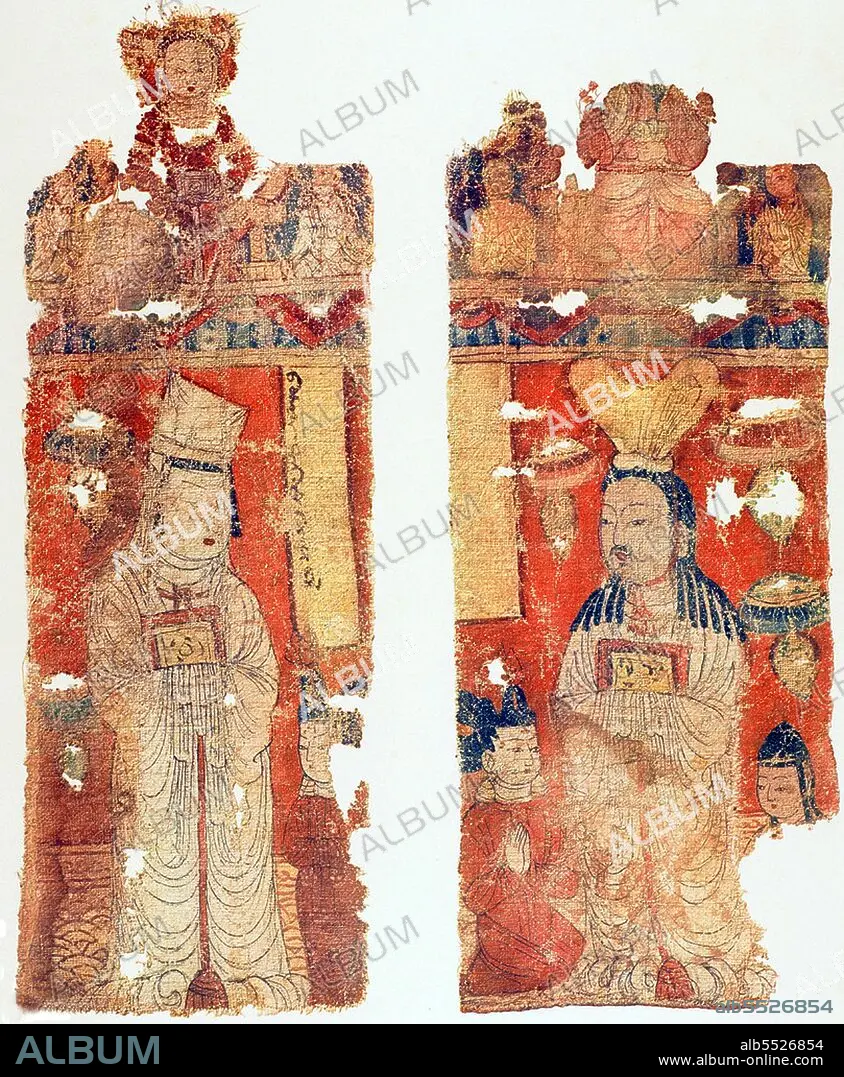
China: Manichaean donors, or possibly the prophet Mani. Bezeklik Thousand Buddha Caves, Turfan, Xinjiang, c. 8th-9th century.
| Compartir |
|---|
 Pinterest Pinterest |
 Twitter Twitter |
 Facebook Facebook |
 Copiar enlace Copiar enlace |
 Email Email |
|
Añadir a otro lightbox |
|
Añadir a otro lightbox |


¿Ya tienes cuenta? Iniciar sesión
¿No tienes cuenta? Regístrate
Compra esta imagen.
Selecciona el uso:

Título: China: Manichaean donors, or possibly the prophet Mani. Bezeklik Thousand Buddha Caves, Turfan, Xinjiang, c. 8th-9th century.
Descripción: Ver traducción automática
Mani (c.216–276 CE), of Iranian origin, was the prophet and the founder of Manichaeism, a gnostic religion of Late Antiquity which was once widespread but is now extinct. Mani was born in or near Seleucia-Ctesiphon in Asuristan (Assyria), at the time still part of the Parthian Empire. Six of his major works were written in Syriac Aramaic and the seventh, dedicated to the king of the empire, Shapur I, was written in Middle Persian. He died in Gundeshapur, under the Sassanid Empire.
Mani (c.216–276 CE), of Iranian origin, was the prophet and the founder of Manichaeism, a gnostic religion of Late Antiquity which was once widespread but is now extinct. Mani was born in or near Seleucia-Ctesiphon in Asuristan (Assyria), at the time still part of the Parthian Empire. Six of his major works were written in Syriac Aramaic and the seventh, dedicated to the king of the empire, Shapur I, was written in Middle Persian. He died in Gundeshapur, under the Sassanid Empire.
Crédito: Album / Pictures from History/Universal Images Group
Autorizaciones: ? Cesión de modelo: No - ? Cesión de propiedad: No
¿Preguntas relacionadas con los derechos?
¿Preguntas relacionadas con los derechos?
Tamaño imagen: 3800 × 4608 px | 50.1 MB
Tamaño impresión: 32.2 × 39.0 cm | 1496.1 × 1814.2 in (300 dpi)
