

alb5529387
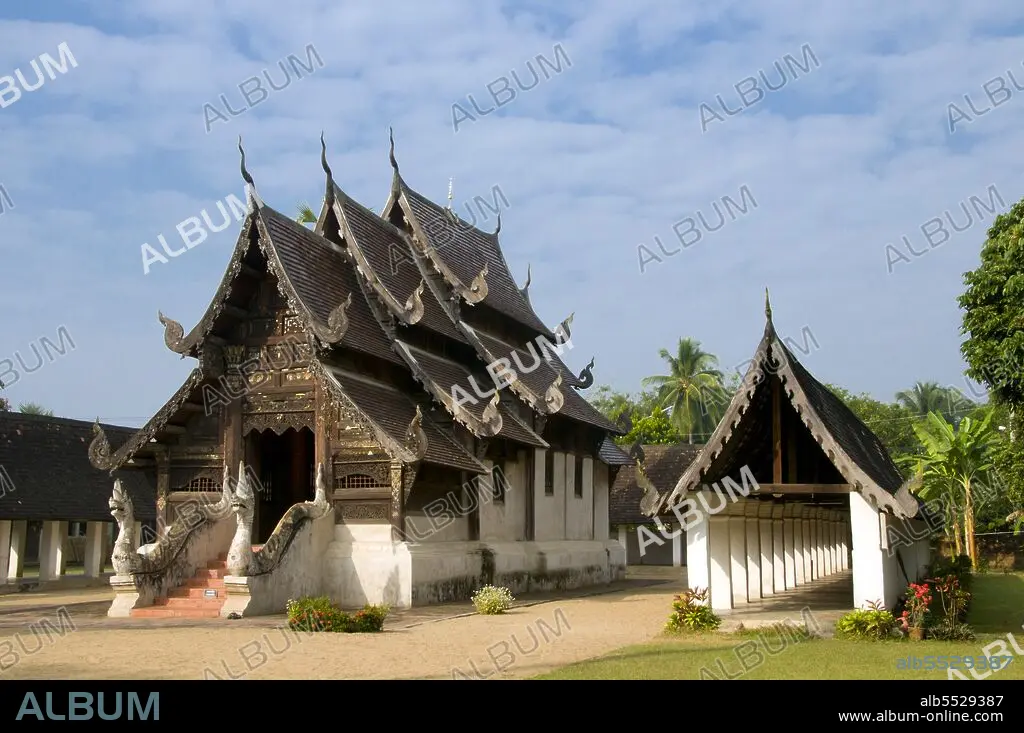
Thailand: Old viharn with surrounding cloister, Wat Ton Kwen, Chiang Mai.
| Compartir |
|---|
 Pinterest Pinterest |
 Twitter Twitter |
 Facebook Facebook |
 Copiar enlace Copiar enlace |
 Email Email |
|
Añadir a otro lightbox |
|
Añadir a otro lightbox |


¿Ya tienes cuenta? Iniciar sesión
¿No tienes cuenta? Regístrate
Compra esta imagen.
Selecciona el uso:

Título: Thailand: Old viharn with surrounding cloister, Wat Ton Kwen, Chiang Mai.
Descripción: Ver traducción automática
Wat Ton Kwen (??? ??? ?????), more formally known as Wat Inthrawat (??? ?????????), means ‘Temple of Sugar Palms’ in kham muang or Northern Thai, and sure enough the rustic temple, set in a small village amid verdant rice paddies, is surrounded by tall and elegant sugar palms. Built at the start of the reign of Chao Kawilorot (1856-70) in 1856, Wat Ton Kwen is among the finest and purest examples surviving of traditional 19th century wooden Lan Na temple architecture. No doubt because of its small size and relative isolation, it has been spared the ‘improvements’ and other indignities suffered not just by most of its contemporary structures, but also by much older Lan Na religious buildings. The most distinctive features at Wat Ton Kwen are the typically Lan Na viharn or gabled assembly hall, and an unusual cruciform, four-porch mondop or open-sided pavilion.
Wat Ton Kwen (??? ??? ?????), more formally known as Wat Inthrawat (??? ?????????), means ‘Temple of Sugar Palms’ in kham muang or Northern Thai, and sure enough the rustic temple, set in a small village amid verdant rice paddies, is surrounded by tall and elegant sugar palms. Built at the start of the reign of Chao Kawilorot (1856-70) in 1856, Wat Ton Kwen is among the finest and purest examples surviving of traditional 19th century wooden Lan Na temple architecture. No doubt because of its small size and relative isolation, it has been spared the ‘improvements’ and other indignities suffered not just by most of its contemporary structures, but also by much older Lan Na religious buildings. The most distinctive features at Wat Ton Kwen are the typically Lan Na viharn or gabled assembly hall, and an unusual cruciform, four-porch mondop or open-sided pavilion.
Crédito: Album / David Henley/Pictures from History/Universal Images Group
Autorizaciones: ? Cesión de modelo: No - ? Cesión de propiedad: No
¿Preguntas relacionadas con los derechos?
¿Preguntas relacionadas con los derechos?
Tamaño imagen: 5100 × 3388 px | 49.4 MB
Tamaño impresión: 43.2 × 28.7 cm | 2007.9 × 1333.9 in (300 dpi)
Palabras clave: ABADIA • ARCHITECTURAL • ARCHITECTURE • ARQUITECTONICA • ARQUITECTONICO • ARQUITECTURA • ASIA • ASIATICO • BUDISMO • BUDISTA • BUDISTAS • CLAUSTRO • HISTORIA • HISTORICO • MONASTERIO • MONASTERIOS • REINO • RELIGION • SIAM • TAILANDES • TAILANDIA • TEMPERA • TEMPLE • TEMPLO • TEMPLOS • THAILANDIA
