

alb5466857
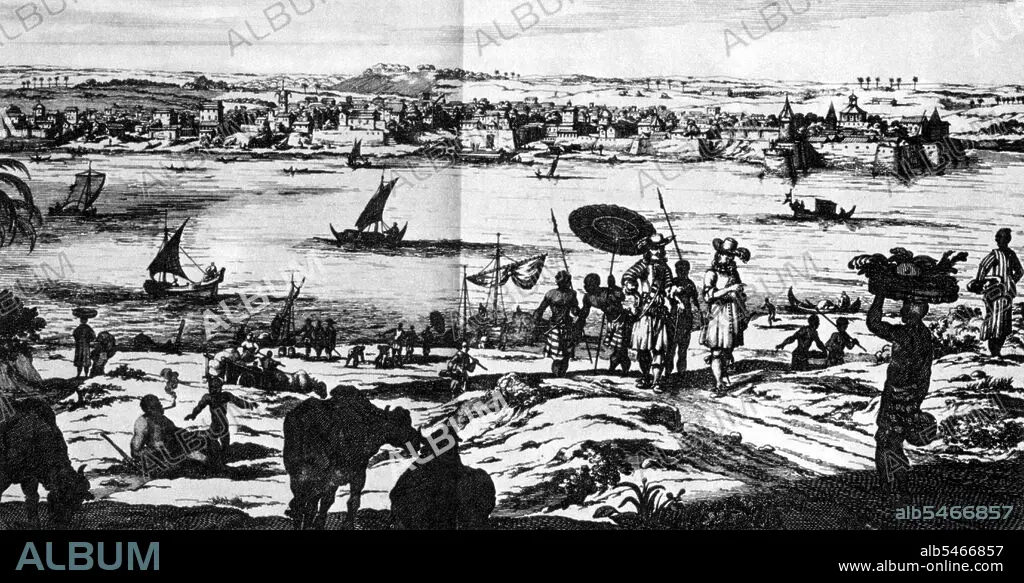
India: The port of Surat in Gujarat on the east coast of India in the 1600s when both Portuguese and British merchants vied for trade privileges by Philippus Baldaeus (1632-1672)
| Compartir |
|---|
 Pinterest Pinterest |
 Twitter Twitter |
 Facebook Facebook |
 Copiar enlace Copiar enlace |
 Email Email |
|
Añadir a otro lightbox |
|
Añadir a otro lightbox |


¿Ya tienes cuenta? Iniciar sesión
¿No tienes cuenta? Regístrate
Compra esta imagen.
Selecciona el uso:

Título: India: The port of Surat in Gujarat on the east coast of India in the 1600s when both Portuguese and British merchants vied for trade privileges by Philippus Baldaeus (1632-1672)
Descripción: Ver traducción automática
Soon after the defeat of the Spanish Armada in 1588, a group of London merchants presented a petition to Queen Elizabeth I for permission to sail to the Indian Ocean. Despite early sailing disasters, the East India Company was formed in 1600. It became the British East India Company after the Treaty of Union in 1707. It was a joint-stock company that was formed initially for pursuing trade with the East Indies, but that ended up trading mainly with the Indian subcontinent and China, mainly in cotton, silk, indigo dye, saltpetre, tea, and opium. The Company long held a privileged position within the British government, and was frequently granted special rights and privileges, including trade monopolies and exemptions, which caused much resentment among its competitors. The Company remained a powerful force until it was dissolved in 1874.
Soon after the defeat of the Spanish Armada in 1588, a group of London merchants presented a petition to Queen Elizabeth I for permission to sail to the Indian Ocean. Despite early sailing disasters, the East India Company was formed in 1600. It became the British East India Company after the Treaty of Union in 1707. It was a joint-stock company that was formed initially for pursuing trade with the East Indies, but that ended up trading mainly with the Indian subcontinent and China, mainly in cotton, silk, indigo dye, saltpetre, tea, and opium. The Company long held a privileged position within the British government, and was frequently granted special rights and privileges, including trade monopolies and exemptions, which caused much resentment among its competitors. The Company remained a powerful force until it was dissolved in 1874.
Crédito: Album / Pictures From History/Universal Images Group
Autorizaciones: ? Cesión de modelo: No - ? Cesión de propiedad: No
¿Preguntas relacionadas con los derechos?
¿Preguntas relacionadas con los derechos?
Tamaño imagen: 5811 × 3009 px | 50.0 MB
Tamaño impresión: 49.2 × 25.5 cm | 2287.8 × 1184.6 in (300 dpi)
