

alb5413175
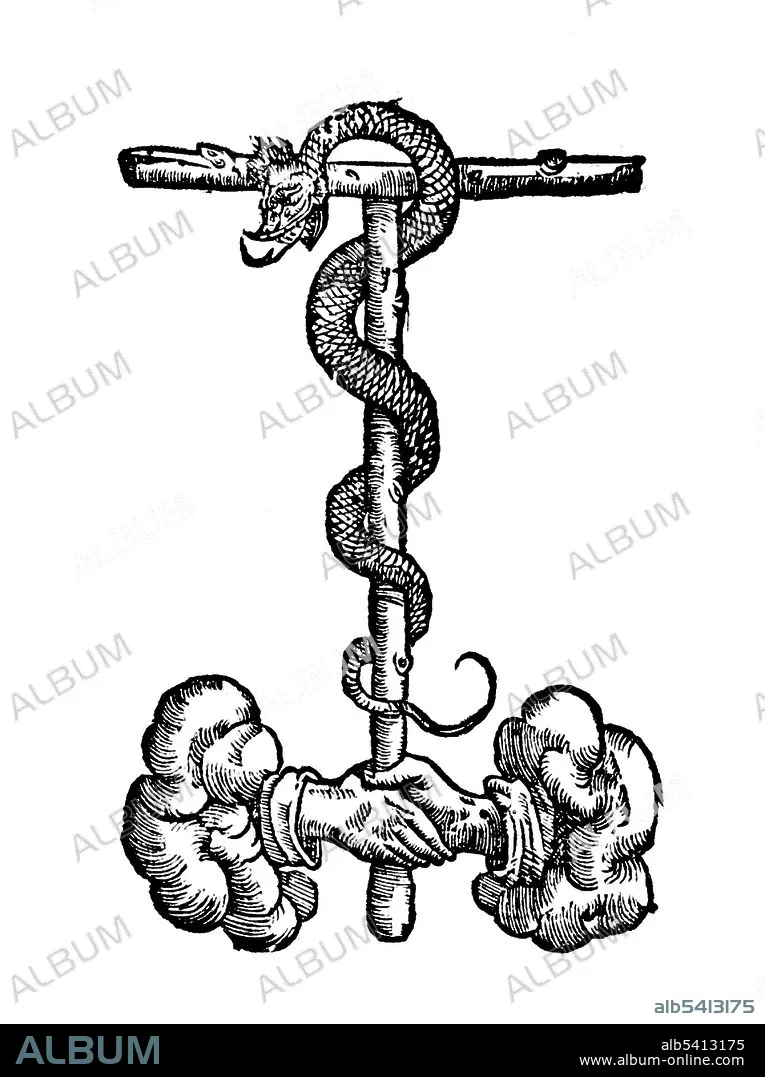
William Gilbert, De Magnete, 1600
| Compartir |
|---|
 Pinterest Pinterest |
 Twitter Twitter |
 Facebook Facebook |
 Copiar enlace Copiar enlace |
 Email Email |
|
Añadir a otro lightbox |
|
Añadir a otro lightbox |


¿Ya tienes cuenta? Iniciar sesión
¿No tienes cuenta? Regístrate
Compra esta imagen.
Selecciona el uso:

Título: William Gilbert, De Magnete, 1600
Descripción: Ver traducción automática
Printer's mark from the title page of De Magnete, Magneticisque Corporibus, et de Magno Magnete Tellure (On the Magnet and Magnetic Bodies, and on That Great Magnet the Earth) a scientific work published in 1600 by William Gilbert. De Magnete was influential because of the inherent interest of its subject matter, but also for the rigorous way in which Gilbert described his experiments and his rejection of ancient theories of magnetism. William Gilbert (1544-1603) was an English physician, physicist and natural philosopher. He was the first to argue that the center of the Earth was iron, and he considered an important and related property of magnets was that they can be cut, each forming a new magnet with north and south poles. He invented the first electrical measuring instrument, the electroscope, in the form of a pivoted needle he called the versorium.
Printer's mark from the title page of De Magnete, Magneticisque Corporibus, et de Magno Magnete Tellure (On the Magnet and Magnetic Bodies, and on That Great Magnet the Earth) a scientific work published in 1600 by William Gilbert. De Magnete was influential because of the inherent interest of its subject matter, but also for the rigorous way in which Gilbert described his experiments and his rejection of ancient theories of magnetism. William Gilbert (1544-1603) was an English physician, physicist and natural philosopher. He was the first to argue that the center of the Earth was iron, and he considered an important and related property of magnets was that they can be cut, each forming a new magnet with north and south poles. He invented the first electrical measuring instrument, the electroscope, in the form of a pivoted needle he called the versorium.
Crédito: Album / LOC/Rare Book Selections/Science Source
Autorizaciones: ? Cesión de modelo: No - ? Cesión de propiedad: No
¿Preguntas relacionadas con los derechos?
¿Preguntas relacionadas con los derechos?
Tamaño imagen: 3250 × 4350 px | 40.4 MB
Tamaño impresión: 27.5 × 36.8 cm | 1279.5 × 1712.6 in (300 dpi)
Palabras clave: ARTE • BLANCO Y NEGRO • CAMPO • GEOFISICA • GILBERT • GRABADO EN MADERA • HISTORIA • HISTORICO • ILUSTRACION • ILUSTRACIONES • MAGNETISMO • OBRA DE ARTE • PLANCHA DE MADERA • PLANETA TIERRA • SIGLO XVII • SIGLO • XILOGRAFIA
