

alb5409491
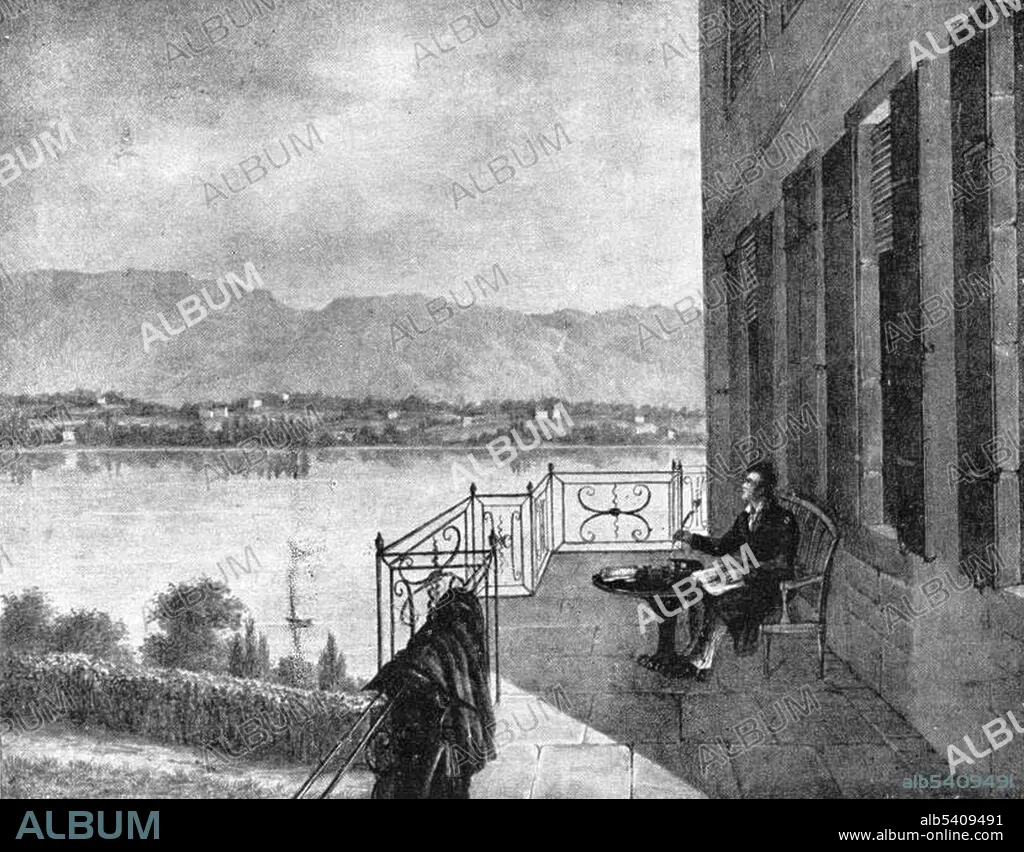
Lord Byron, English Poet, at Villa Diodati
| Compartir |
|---|
 Pinterest Pinterest |
 Twitter Twitter |
 Facebook Facebook |
 Copiar enlace Copiar enlace |
 Email Email |
|
Añadir a otro lightbox |
|
Añadir a otro lightbox |


¿Ya tienes cuenta? Iniciar sesión
¿No tienes cuenta? Regístrate
Compra esta imagen.
Selecciona el uso:

Título:
Lord Byron, English Poet, at Villa Diodati
Descripción:
Traducción automática: Lord Byron en la Villa Diodati, junto al lago de Ginebra, hacia 1820. Allí, unos años antes, Byron había propuesto que todos escribieran historias de fantasmas, tras lo cual Mary Shelley escribió el relato que se convirtió en Frankenstein. George Gordon Byron (1788-1824), conocido como Lord Byron, fue un poeta, noble y político inglés que se convirtió en revolucionario en la Guerra de Independencia de Grecia y es considerado una de las figuras principales del movimiento romántico. Se le considera uno de los mayores poetas ingleses y sigue siendo muy leído e influyente. Entre sus obras más conocidas se encuentran los extensos poemas narrativos Don Juan y La peregrinación de Childe Harold.
Lord Byron at the Villa Diodati on Lake Geneva, ca. 1820. This is where, a few years earlier, Bryon had proposed that they all write ghost stories, after which Mary Shelley wrote the tale that became Frankenstein. George Gordon Byron (1788-1824), known as Lord Byron, was an English poet, peer and politician who became a revolutionary in the Greek War of Independence, and is considered one of the leading figures of the Romantic movement. He is regarded as one of the greatest English poets and remains widely read and influential. Among his best-known works are the lengthy narrative poems Don Juan and Childe Harold's Pilgrimage.
Personas:
Crédito:
Album / Science Source / NYPL
Autorizaciones:
Tamaño imagen:
2700 x 2107 px | 16.3 MB
Tamaño impresión:
22.9 x 17.8 cm | 9.0 x 7.0 in (300 dpi)
Palabras clave:
ARTE • AUTOR • BLANCO Y NEGRO • BYRON • CASA • FAMOSA • FAMOSO • FAMOSOS • FRANKENSTEIN • GRABADO • HISTORIA • HOMBRE • ILUSTRACION • INGLES • LITERARIO • LORD BYRON • MARY SHELLEY • MASCULINO • POETA • RETRATO DE HOMBRE • SIGLO XIX • SUIZA
