

alb5530267
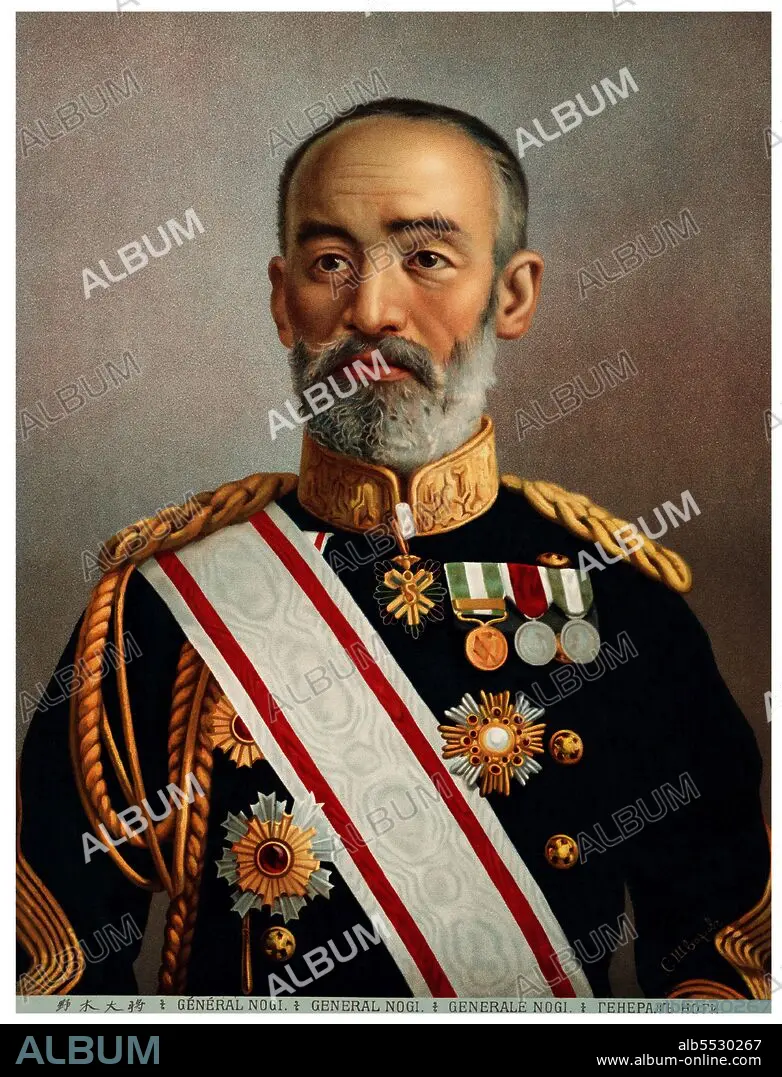
Japan: Count Maresuke Nogi, general in the Imperial Japanese Army (1849-1912)
| Compartir |
|---|
 Pinterest Pinterest |
 Twitter Twitter |
 Facebook Facebook |
 Copiar enlace Copiar enlace |
 Email Email |
|
Añadir a otro lightbox |
|
Añadir a otro lightbox |


¿Ya tienes cuenta? Iniciar sesión
¿No tienes cuenta? Regístrate
Compra esta imagen.
Selecciona el uso:

Título: Japan: Count Maresuke Nogi, general in the Imperial Japanese Army (1849-1912)
Descripción: Ver traducción automática
Count Nogi Maresuke, GCB (?? ??), also known as Kiten. Count Nogi, (25 December 1849–13 September 1912) was a general in the Imperial Japanese Army and a governor of Taiwan. He was one of the commanders during the 1894 capture of Port Arthur from China, and the subsequent massacre of thousands of Chinese civilians. He was a prominent figure in the Russo-Japanese War of 1904-5, as commander of the forces which captured Port Arthur from the Russians. He was a national hero in Imperial Japan as a model of feudal loyalty and self-sacrifice, ultimately to the point of suicide. In the Satsuma Rebellion, he lost a banner of the emperor in battle, for which he tried to atone with suicidal bravery in order to recapture it, until ordered to stop. In the Russo-Japanese War, he captured Port Arthur but he felt that he had lost too many of his soldiers, so requested permission to commit suicide, which the emperor refused. These two events, as well as his desire not to outlive his master (junshi), motivated his suicide on the day of the funeral of the Emperor Meiji. His example revitalized the Japanese tradition of ritual suicide.
Count Nogi Maresuke, GCB (?? ??), also known as Kiten. Count Nogi, (25 December 1849–13 September 1912) was a general in the Imperial Japanese Army and a governor of Taiwan. He was one of the commanders during the 1894 capture of Port Arthur from China, and the subsequent massacre of thousands of Chinese civilians. He was a prominent figure in the Russo-Japanese War of 1904-5, as commander of the forces which captured Port Arthur from the Russians. He was a national hero in Imperial Japan as a model of feudal loyalty and self-sacrifice, ultimately to the point of suicide. In the Satsuma Rebellion, he lost a banner of the emperor in battle, for which he tried to atone with suicidal bravery in order to recapture it, until ordered to stop. In the Russo-Japanese War, he captured Port Arthur but he felt that he had lost too many of his soldiers, so requested permission to commit suicide, which the emperor refused. These two events, as well as his desire not to outlive his master (junshi), motivated his suicide on the day of the funeral of the Emperor Meiji. His example revitalized the Japanese tradition of ritual suicide.
Crédito: Album / Pictures From History/Universal Images Group
Autorizaciones: ? Cesión de modelo: No - ? Cesión de propiedad: No
¿Preguntas relacionadas con los derechos?
¿Preguntas relacionadas con los derechos?
Tamaño imagen: 3700 × 4845 px | 51.3 MB
Tamaño impresión: 31.3 × 41.0 cm | 1456.7 × 1907.5 in (300 dpi)
