

alb5469151
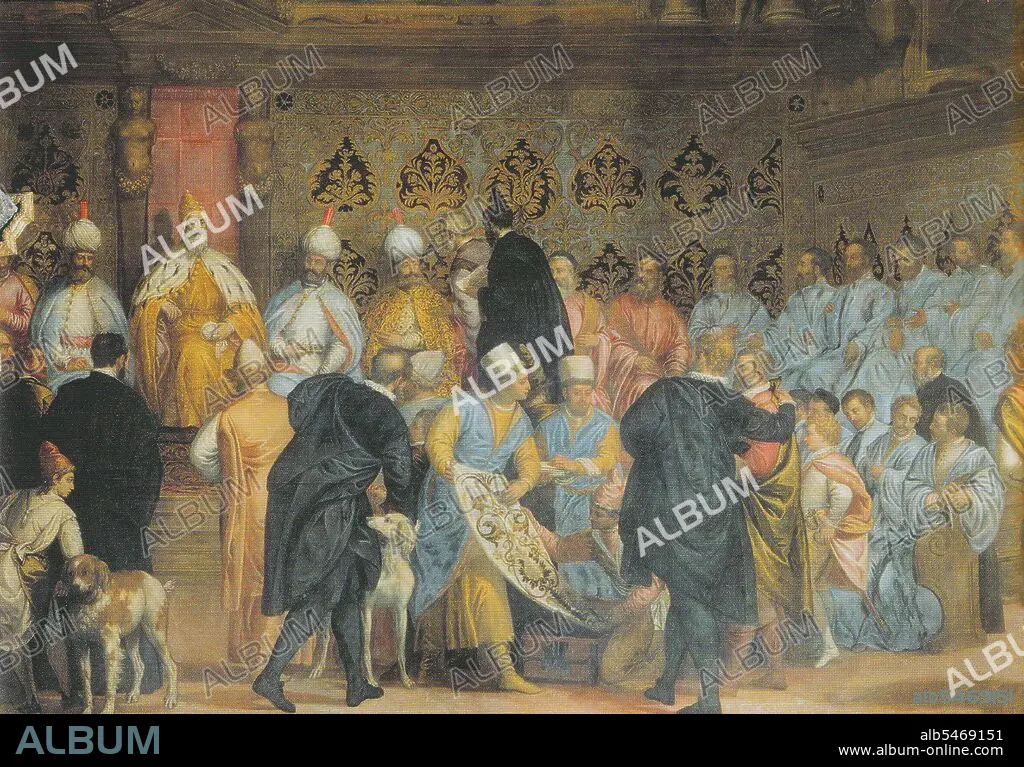
Italy-Iran-Venice-Persia: A diplomatic meeting between the Persian envoy and the Doge Marino Grimani in 1595 as depicted in the Doge’s Palace. Carlo Caliari and Gabriele Calliari, c. 1600
| Compartir |
|---|
 Pinterest Pinterest |
 Twitter Twitter |
 Facebook Facebook |
 Copiar enlace Copiar enlace |
 Email Email |
|
Añadir a otro lightbox |
|
Añadir a otro lightbox |


¿Ya tienes cuenta? Iniciar sesión
¿No tienes cuenta? Regístrate
Compra esta imagen.
Selecciona el uso:

Título: Italy-Iran-Venice-Persia: A diplomatic meeting between the Persian envoy and the Doge Marino Grimani in 1595 as depicted in the Doge’s Palace. Carlo Caliari and Gabriele Calliari, c. 1600
Descripción: Ver traducción automática
Shah ‘Abbas the Great (or Shah ‘Abbas I) (Persian: ??? ???? ????) (January 27, 1571 – January 19, 1629) was Shah (king) of Iran, and generally considered the greatest ruler of the Safavid dynasty. He was the third son of Shah Mohammad. Abbas came to the throne during a troubled time for Iran. Under his weak-willed father, the country was riven with discord between the different factions of the Qizilbash army, who killed Abbas' mother and elder brother. Meanwhile, Iran's enemies, the Ottoman Empire and the Uzbeks, exploited this political chaos to seize territory for themselves. In 1587, one of the Qizilbash leaders, Murshid Qoli Khan, overthrew Shah Mohammed in a coup and placed the 16-year-old Abbas on the throne. But Abbas was no puppet and soon seized power for himself. He reduced the influence of the Qizilbash in the government and the military and reformed the army, enabling him to fight the Ottomans and Uzbeks and reconquer Iran's lost provinces. He also took back land from the Portuguese and the Mughals.
Shah ‘Abbas the Great (or Shah ‘Abbas I) (Persian: ??? ???? ????) (January 27, 1571 – January 19, 1629) was Shah (king) of Iran, and generally considered the greatest ruler of the Safavid dynasty. He was the third son of Shah Mohammad. Abbas came to the throne during a troubled time for Iran. Under his weak-willed father, the country was riven with discord between the different factions of the Qizilbash army, who killed Abbas' mother and elder brother. Meanwhile, Iran's enemies, the Ottoman Empire and the Uzbeks, exploited this political chaos to seize territory for themselves. In 1587, one of the Qizilbash leaders, Murshid Qoli Khan, overthrew Shah Mohammed in a coup and placed the 16-year-old Abbas on the throne. But Abbas was no puppet and soon seized power for himself. He reduced the influence of the Qizilbash in the government and the military and reformed the army, enabling him to fight the Ottomans and Uzbeks and reconquer Iran's lost provinces. He also took back land from the Portuguese and the Mughals.
Crédito: Album / Pictures From History/Universal Images Group
Autorizaciones: ? Cesión de modelo: No - ? Cesión de propiedad: No
¿Preguntas relacionadas con los derechos?
¿Preguntas relacionadas con los derechos?
Tamaño imagen: 4958 × 3455 px | 49.0 MB
Tamaño impresión: 42.0 × 29.3 cm | 1952.0 × 1360.2 in (300 dpi)
