

alb3794411
Stardust Mission, Comet Dust
| Compartir |
|---|
 Pinterest Pinterest |
 Twitter Twitter |
 Facebook Facebook |
 Copiar enlace Copiar enlace |
 Email Email |
|
Añadir a otro lightbox |
|
Añadir a otro lightbox |


¿Ya tienes cuenta? Iniciar sesión
¿No tienes cuenta? Regístrate
Compra esta imagen.
Selecciona el uso:

Título: Stardust Mission, Comet Dust
Descripción: Ver traducción automática
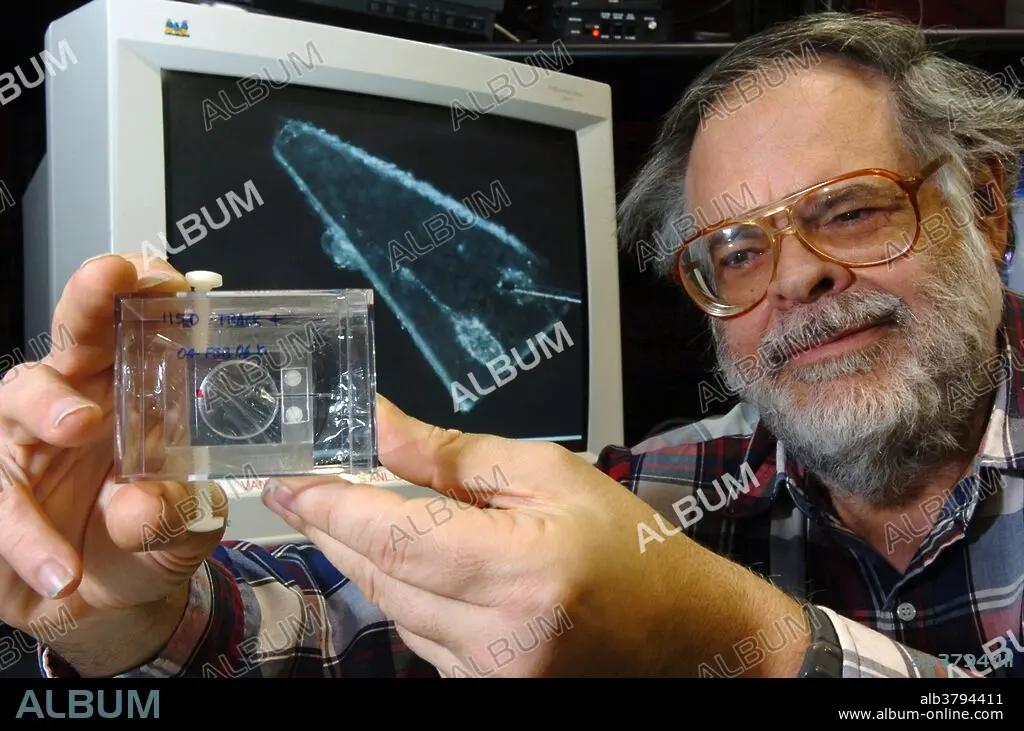
Researcher displays a sample from the Stardust mission, which collected samples of comet dust and returned them to the Earth. The sample was analyzed at the Advanced Photon Source at Argonne National Laboratory. The particles are the first pieces of a comet to have ever been plucked from outer space and returned to Earth. The primary goal of Stardust was to collect dust and carbon-based samples during its closest encounter with Comet Wild 2. Samples spent a few days at Argonne and were bombarded by the high-precision X-ray beams from the Advanced Photon Source (APS). By using the APS to map the samples, researchers hope to determine their chemical makeup and to gain a better understanding of the composition of comets and other planetary bodies, including the Earth. The particles were captured in aerogel, a special type of foamed glass, made so lightweight that it is barely visible and almost floats in air. This project gives scientists the opportunity to determine the unique characteristics of a comet.
Researcher displays a sample from the Stardust mission, which collected samples of comet dust and returned them to the Earth. The sample was analyzed at the Advanced Photon Source at Argonne National Laboratory. The particles are the first pieces of a comet to have ever been plucked from outer space and returned to Earth. The primary goal of Stardust was to collect dust and carbon-based samples during its closest encounter with Comet Wild 2. Samples spent a few days at Argonne and were bombarded by the high-precision X-ray beams from the Advanced Photon Source (APS). By using the APS to map the samples, researchers hope to determine their chemical makeup and to gain a better understanding of the composition of comets and other planetary bodies, including the Earth. The particles were captured in aerogel, a special type of foamed glass, made so lightweight that it is barely visible and almost floats in air. This project gives scientists the opportunity to determine the unique characteristics of a comet.
Crédito: Album / Science Source / Argonne National Laboratory
Autorizaciones: ? Cesión de modelo: No - ? Cesión de propiedad: No
¿Preguntas relacionadas con los derechos?
¿Preguntas relacionadas con los derechos?
Tamaño imagen: 2100 × 1391 px | 8.4 MB
Tamaño impresión: 17.8 × 11.8 cm | 826.8 × 547.6 in (300 dpi)
Palabras clave: ANALISIS • CENTRO DE INVESTIGACIÓN • CIENCIA • CIENTIFICO • COMETA (ARTEFACTO VOLADOR) • COMETA • DESCUBRIDOR • EXPLORADOR • INVESTIGACION • NASA • POLVO CÓSMICO • UNIVERSO
