

alb4363323
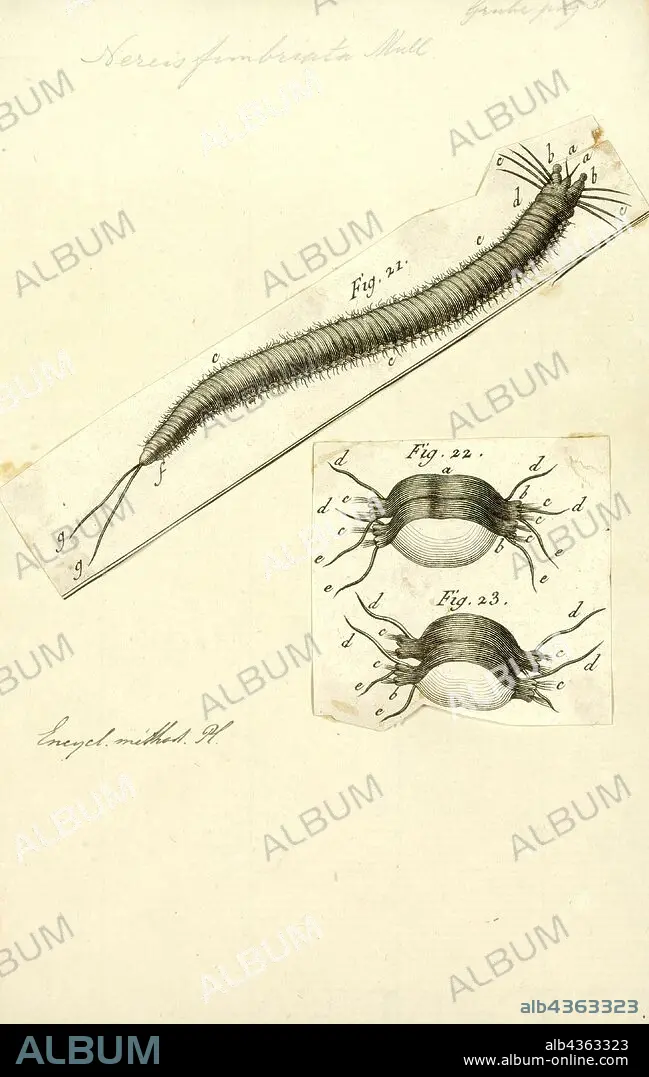
Nereis fimbriata, Print, Nereis is a genus of polychaete worms in the family Nereididae. It comprises many species, most of which are marine. Nereis possess setae and parapodia for locomotion. They may have two types of setae, which are found on the parapodia. Acicular setae provide support. Locomotor chaetae are for crawling, and are the bristles that are visible on the exterior of the Polychaeta. They are cylindrical in shape, found not only in sandy areas, and they are adapted to burrow. They often cling to seagrass (posidonia) or other grass on rocks and sometimes gather in large groups. They are dangerous to touch giving very painful long lasting burns... In Maltese they are called BUSUF.
| Compartir |
|---|
 Pinterest Pinterest |
 Twitter Twitter |
 Facebook Facebook |
 Copiar enlace Copiar enlace |
 Email Email |
|
Añadir a otro lightbox |
|
Añadir a otro lightbox |


¿Ya tienes cuenta? Iniciar sesión
¿No tienes cuenta? Regístrate
Compra esta imagen.
Selecciona el uso:

Descripción: Ver traducción automática
Nereis fimbriata, Print, Nereis is a genus of polychaete worms in the family Nereididae. It comprises many species, most of which are marine. Nereis possess setae and parapodia for locomotion. They may have two types of setae, which are found on the parapodia. Acicular setae provide support. Locomotor chaetae are for crawling, and are the bristles that are visible on the exterior of the Polychaeta. They are cylindrical in shape, found not only in sandy areas, and they are adapted to burrow. They often cling to seagrass (posidonia) or other grass on rocks and sometimes gather in large groups. They are dangerous to touch giving very painful long lasting burns... In Maltese they are called BUSUF
Nereis fimbriata, Print, Nereis is a genus of polychaete worms in the family Nereididae. It comprises many species, most of which are marine. Nereis possess setae and parapodia for locomotion. They may have two types of setae, which are found on the parapodia. Acicular setae provide support. Locomotor chaetae are for crawling, and are the bristles that are visible on the exterior of the Polychaeta. They are cylindrical in shape, found not only in sandy areas, and they are adapted to burrow. They often cling to seagrass (posidonia) or other grass on rocks and sometimes gather in large groups. They are dangerous to touch giving very painful long lasting burns... In Maltese they are called BUSUF
Crédito: Album / quintlox
Autorizaciones: ? Cesión de modelo: No - ? Cesión de propiedad: No
¿Preguntas relacionadas con los derechos?
¿Preguntas relacionadas con los derechos?
Tamaño imagen: 2918 × 4606 px | 38.5 MB
Tamaño impresión: 24.7 × 39.0 cm | 1148.8 × 1813.4 in (300 dpi)
Palabras clave: ADAPTADOS • ADHERIRSE • CERDAS • CESPED • CYLINDRICAL • ESPECIES • EXTERIOR • FAMILIA • FAMILIAR • FAMILIARES • FAMILIAS • FAMILY • FORMA • IMPRESION • MADRIGUERA • MALTES • MARINA • PELIGROSAS • PIEDRA • PIEDRAS • POLIQUETOS • ROCA • ROCAS • SHAPE
