

alb9097954
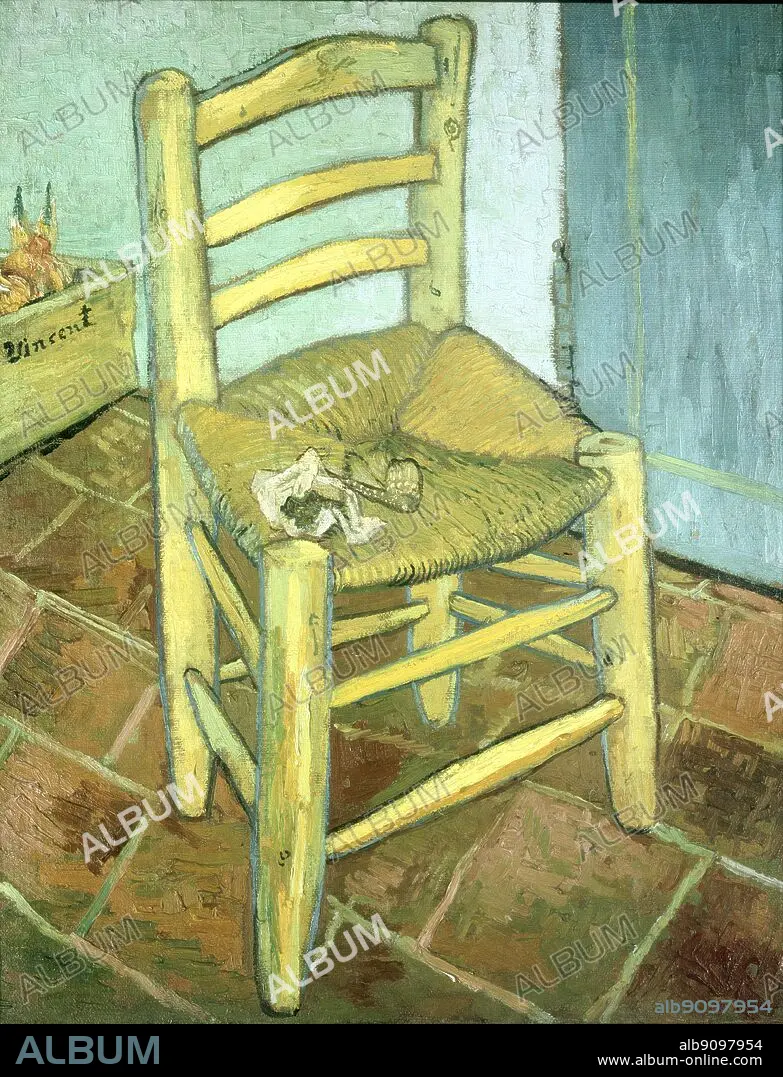
Vincent's Chair and his Pipe - Arles, December 1888. by Van Gogh. Tate Gallery. The two paintings of Vincent's and Paul Gauguin's chairs are among the most often analyzed of Van Gogh's works. In addition to the symbolic undercurrents of the work, these two paintings are also unique in terms of the way in which they're displayed together--whether at the rare exhibits in which they have been shown together (London, 1968, for example) or simply side by side in a book. Generally, if Gauguin's chair is displayed on the left, then the chairs seem to be facing away from each other--clearly symbolizing the often conflicting natures of Van Gogh and Gauguin. This is generally how the works are shown, given the volatile relationship between the two painters. If the paintings are displayed as facing each other, a different interpretation is suggested--that of a mutual respect between the artists; a grudging, but sincere admiration in spite of the unfortunate outcome of their relationship in "the Yellow House" in Arles. . ©2006 TopFoto
| Compartir |
|---|
 Pinterest Pinterest |
 Twitter Twitter |
 Facebook Facebook |
 Copiar enlace Copiar enlace |
 Email Email |
|
Añadir a otro lightbox |
|
Añadir a otro lightbox |


¿Ya tienes cuenta? Iniciar sesión
¿No tienes cuenta? Regístrate
Compra esta imagen.
Selecciona el uso:

Título: Vincent's Chair and his Pipe - Arles, December 1888. by Van Gogh. Tate Gallery. The two paintings of Vincent's and Paul Gauguin's chairs are among the most often analyzed of Van Gogh's works. In addition to the symbolic undercurrents of the work, these two paintings are also unique in terms of the way in which they're displayed together--whether at the rare exhibits in which they have been shown together (London, 1968, for example) or simply side by side in a book. Generally, if Gauguin's chair is displayed on the left, then the chairs seem to be facing away from each other--clearly symbolizing the often conflicting natures of Van Gogh and Gauguin. This is generally how the works are shown, given the volatile relationship between the two painters. If the paintings are displayed as facing each other, a different interpretation is suggested--that of a mutual respect between the artists; a grudging, but sincere admiration in spite of the unfortunate outcome of their relationship in "the Yellow House" in Arles. . ©2006 TopFoto
Descripción: Ver traducción automática
Vincent's Chair and his Pipe - Arles, December 1888. by Van Gogh. Tate Gallery. The two paintings of Vincent's and Paul Gauguin's chairs are among the most often analyzed of Van Gogh's works. In addition to the symbolic undercurrents of the work, these two paintings are also unique in terms of the way in which they're displayed together--whether at the rare exhibits in which they have been shown together (London, 1968, for example) or simply side by side in a book. Generally, if Gauguin's chair is displayed on the left, then the chairs seem to be facing away from each other--clearly symbolizing the often conflicting natures of Van Gogh and Gauguin. This is generally how the works are shown, given the volatile relationship between the two painters. If the paintings are displayed as facing each other, a different interpretation is suggested--that of a mutual respect between the artists; a grudging, but sincere admiration in spite of the unfortunate outcome of their relationship in "the Yellow House" in Arles. ©2006 TopFoto
Vincent's Chair and his Pipe - Arles, December 1888. by Van Gogh. Tate Gallery. The two paintings of Vincent's and Paul Gauguin's chairs are among the most often analyzed of Van Gogh's works. In addition to the symbolic undercurrents of the work, these two paintings are also unique in terms of the way in which they're displayed together--whether at the rare exhibits in which they have been shown together (London, 1968, for example) or simply side by side in a book. Generally, if Gauguin's chair is displayed on the left, then the chairs seem to be facing away from each other--clearly symbolizing the often conflicting natures of Van Gogh and Gauguin. This is generally how the works are shown, given the volatile relationship between the two painters. If the paintings are displayed as facing each other, a different interpretation is suggested--that of a mutual respect between the artists; a grudging, but sincere admiration in spite of the unfortunate outcome of their relationship in "the Yellow House" in Arles. ©2006 TopFoto
Crédito: Album / TopFoto
Autorizaciones: ? Cesión de modelo: No - ? Cesión de propiedad: No
¿Preguntas relacionadas con los derechos?
¿Preguntas relacionadas con los derechos?
Tamaño imagen: 3792 × 4961 px | 53.8 MB
Tamaño impresión: 32.1 × 42.0 cm | 1492.9 × 1953.1 in (300 dpi)
