

alb4048161
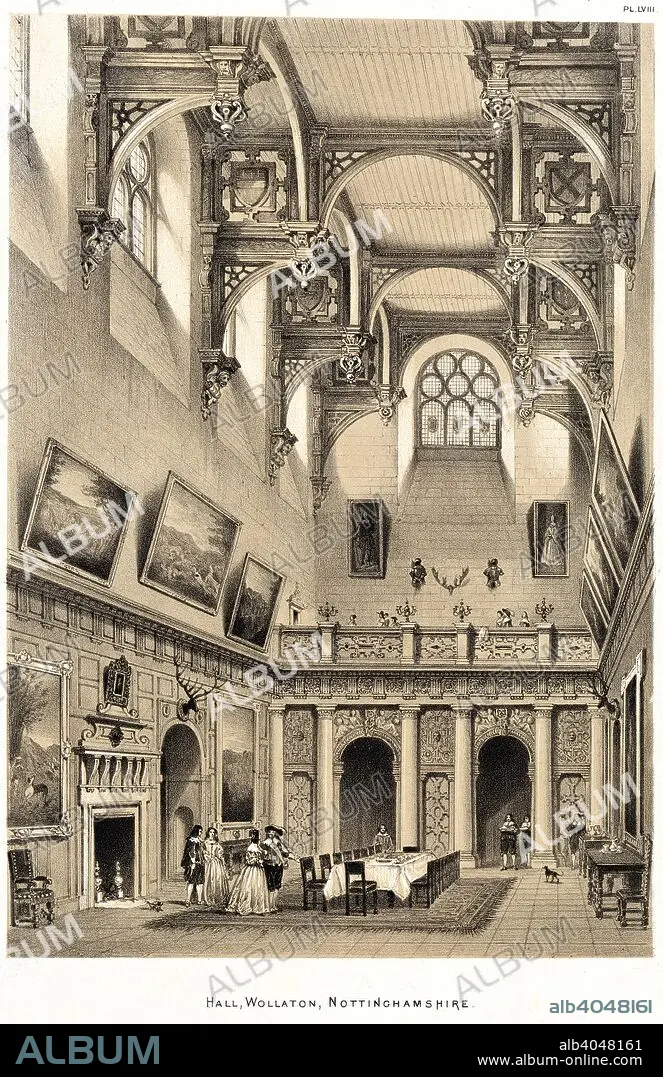
Interior of the Great Hall, Wollaton Hall, Nottingham, Nottinghamshire, 1841. Artist: Joseph Nash
| Compartir |
|---|
 Pinterest Pinterest |
 Twitter Twitter |
 Facebook Facebook |
 Copiar enlace Copiar enlace |
 Email Email |
|
Añadir a otro lightbox |
|
Añadir a otro lightbox |


¿Ya tienes cuenta? Iniciar sesión
¿No tienes cuenta? Regístrate
Compra esta imagen.
Selecciona el uso:

Título:
Interior of the Great Hall, Wollaton Hall, Nottingham, Nottinghamshire, 1841. Artist: Joseph Nash
Descripción:
Ver traducción automática
Interior of the Great Hall, Wollaton Hall, Nottingham, Nottinghamshire, 1841. Lithograph print taken from Nash's Mansions of England. It shows the hammer-beamed ceiling and gallery in the Great Hall. The picture was drawn in 1841 and depicts the hall at an earlier date with people in Stuart/Civil War costumes. Sir Francis Willoughby began to build his new hall at Wollaton in 1580, and it was eight years before it was completed. Much of the money for its construction derived from the wealth acquired by the Willoughbys from early coal mining in the area. The stone was brought from Ancaster in exchange for coal, and the total cost of the building reached about £8000. The Willoughby family did not recover from the expense for two generations. Robert Smythson, who had previously worked at Longleat and ten years later was to design Hardwick Hall, was the 'architector and surveyor'. The Hall was designed for show rather than comfort. The Elizabethans were fascinated by pattern and symmetry and the design shows both of these, reflecting ideals of the late Renaissance period.
Personas:
Crédito:
Album / www.picturethepast.org.uk/Nottingham City Council / Heritage Images
Autorizaciones:
Tamaño imagen:
3385 x 5229 px | 50.6 MB
Tamaño impresión:
28.7 x 44.3 cm | 11.3 x 17.4 in (300 dpi)
Palabras clave:
ARQUITECTURA • BLANCO Y NEGRO • CARACTERÍSTICA ARQUITECTÓNICA • CASA DE CAMPO • EDIFICIO • EDIFICIOS • INGLATERRA • INTERIOR • INTERIORES • ISABELINO • JOSEPH NASH • JOSEPH • LITOGRAFIA • MONOCHROME • MONOCROMO • RESIDENCIA SEÑORIAL • ROBERT • S. XVI • SIGLO XIX • SIGLO XVI • SIGLO XVII • SIGLO • STUART • TECHO • TUDOR • VESTIDO
