

alb9493874
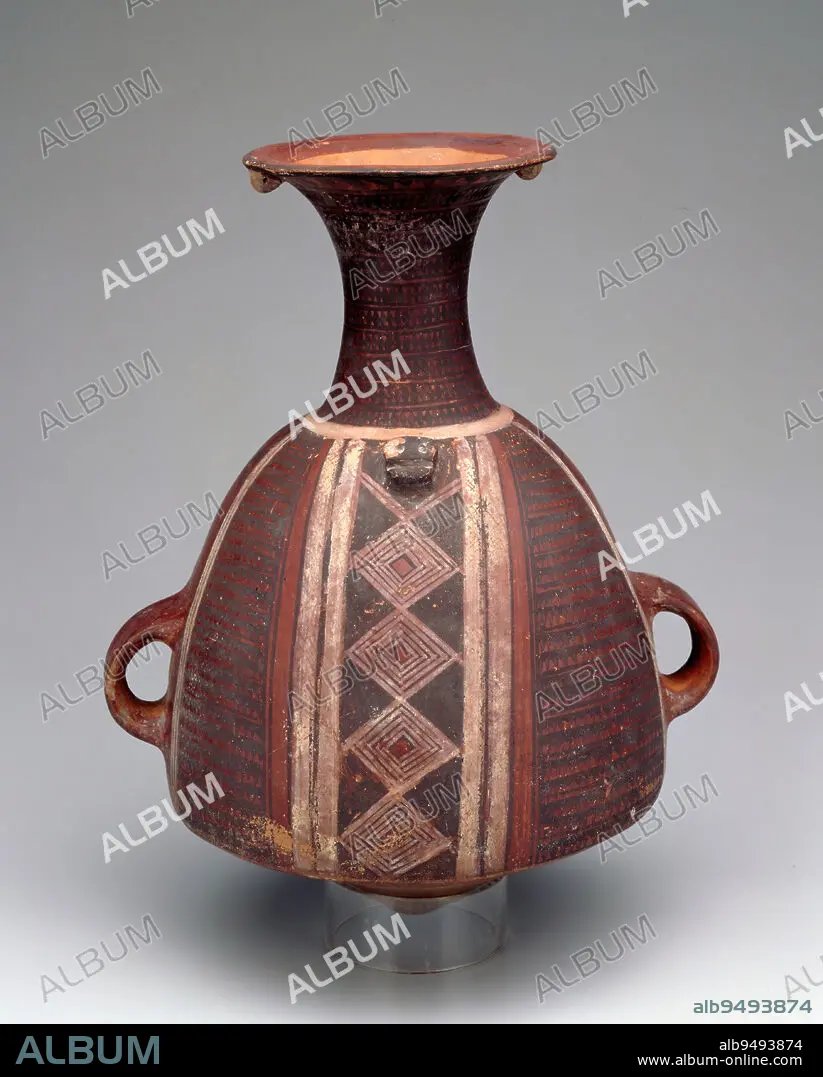
Vessel, 15th century, 13 1/2 in. (34.3 cm), Clay, pigments, Peru, 15th century, Urpu, a distinctively Inka vessel shape, is characterized by a pointed base, bulbous body, low handles, long, slender neck, and flaring rim. The pointed bottom helped balance the vessel in a depression in the earth. Rope was threaded through the handles and around the lug, then strapped onto porters' backs for transport. Rather than adopting the word urpu from the local Quechua language, early archaeologists called this type of vessel aryballos, a name borrowed from an ancient Greek vase form illustrated here in a line drawing. Urpu were produced in and around the Inka capital of Qosqo (Cuzco) for use in making, storing, and transporting food and beverages, in particular chicha or fermented maize beer.
| Compartir |
|---|
 Pinterest Pinterest |
 Twitter Twitter |
 Facebook Facebook |
 Copiar enlace Copiar enlace |
 Email Email |
|
Añadir a otro lightbox |
|
Añadir a otro lightbox |


¿Ya tienes cuenta? Iniciar sesión
¿No tienes cuenta? Regístrate
Compra esta imagen.
Selecciona el uso:

Descripción: Ver traducción automática
Vessel, 15th century, 13 1/2 in. (34.3 cm), Clay, pigments, Peru, 15th century, Urpu, a distinctively Inka vessel shape, is characterized by a pointed base, bulbous body, low handles, long, slender neck, and flaring rim. The pointed bottom helped balance the vessel in a depression in the earth. Rope was threaded through the handles and around the lug, then strapped onto porters' backs for transport. Rather than adopting the word urpu from the local Quechua language, early archaeologists called this type of vessel aryballos, a name borrowed from an ancient Greek vase form illustrated here in a line drawing. Urpu were produced in and around the Inka capital of Qosqo (Cuzco) for use in making, storing, and transporting food and beverages, in particular chicha or fermented maize beer.
Vessel, 15th century, 13 1/2 in. (34.3 cm), Clay, pigments, Peru, 15th century, Urpu, a distinctively Inka vessel shape, is characterized by a pointed base, bulbous body, low handles, long, slender neck, and flaring rim. The pointed bottom helped balance the vessel in a depression in the earth. Rope was threaded through the handles and around the lug, then strapped onto porters' backs for transport. Rather than adopting the word urpu from the local Quechua language, early archaeologists called this type of vessel aryballos, a name borrowed from an ancient Greek vase form illustrated here in a line drawing. Urpu were produced in and around the Inka capital of Qosqo (Cuzco) for use in making, storing, and transporting food and beverages, in particular chicha or fermented maize beer.
Crédito: Album / quintlox
Autorizaciones: ? Cesión de modelo: No - ? Cesión de propiedad: No
¿Preguntas relacionadas con los derechos?
¿Preguntas relacionadas con los derechos?
Tamaño imagen: 3780 × 4705 px | 50.9 MB
Tamaño impresión: 32.0 × 39.8 cm | 1488.2 × 1852.4 in (300 dpi)
