

alb3654893
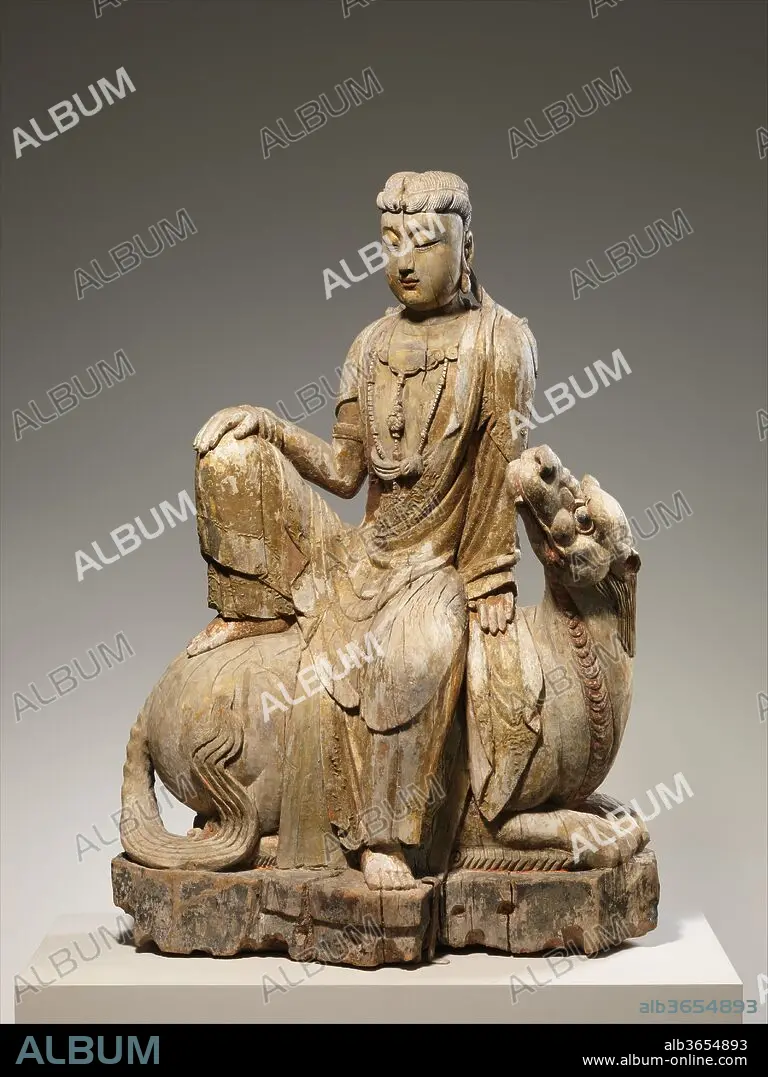
Bodhisattva Avalokiteshvara of the Lion's Roar, or Simhanada Avalokiteshvara (Shi Hou Guanyin)
| Compartir |
|---|
 Pinterest Pinterest |
 Twitter Twitter |
 Facebook Facebook |
 Copiar enlace Copiar enlace |
 Email Email |
|
Añadir a otro lightbox |
|
Añadir a otro lightbox |


¿Ya tienes cuenta? Iniciar sesión
¿No tienes cuenta? Regístrate
Compra esta imagen.
Selecciona el uso:

Título: Bodhisattva Avalokiteshvara of the Lion's Roar, or Simhanada Avalokiteshvara (Shi Hou Guanyin)
Descripción: Ver traducción automática
Bodhisattva Avalokiteshvara of the Lion's Roar, or Simhanada Avalokiteshvara (Shi Hou Guanyin). Culture: China. Dimensions: H. 42 1/8 in. (107 cm); W. 29 in. ( 73.7 cm); D. 13 in. (33 cm). Date: late 15th-early 17th century. Avalokiteshvara (the Bodhisattva of Compassion) and Manjushri (the Bodhisattva of Wisdom) are identifiable by the fact that both, at times, appear atop lions. As such, they are said to assume the form of Simhanada, or the Lion's Roar, which is a reference to the intensity of the moment of enlightenment. Here, the lion's recumbent pose and the bodhisattva's sidewise posture suggest that this sculpture represents Simhanada Avalokiteshvara, although the headdress does not bear the image of a seated Buddha, which is Avalokiteshvara's standard identifying attribute. Depictions of Simhanada Avalokiteshvara developed in India around the eleventh or twelfth century and appeared in China during the twelfth.
Bodhisattva Avalokiteshvara of the Lion's Roar, or Simhanada Avalokiteshvara (Shi Hou Guanyin). Culture: China. Dimensions: H. 42 1/8 in. (107 cm); W. 29 in. ( 73.7 cm); D. 13 in. (33 cm). Date: late 15th-early 17th century. Avalokiteshvara (the Bodhisattva of Compassion) and Manjushri (the Bodhisattva of Wisdom) are identifiable by the fact that both, at times, appear atop lions. As such, they are said to assume the form of Simhanada, or the Lion's Roar, which is a reference to the intensity of the moment of enlightenment. Here, the lion's recumbent pose and the bodhisattva's sidewise posture suggest that this sculpture represents Simhanada Avalokiteshvara, although the headdress does not bear the image of a seated Buddha, which is Avalokiteshvara's standard identifying attribute. Depictions of Simhanada Avalokiteshvara developed in India around the eleventh or twelfth century and appeared in China during the twelfth.
Técnica/material: Wood (poplar) with pigment; single-woodblock construction
Periodo: Ming dynasty (1368-1644)
Museo: Metropolitan Museum of Art, New York, USA
Crédito: Album
Autorizaciones: ? Cesión de modelo: No - ? Cesión de propiedad: No
¿Preguntas relacionadas con los derechos?
¿Preguntas relacionadas con los derechos?
Tamaño imagen: 3203 × 4268 px | 39.1 MB
Tamaño impresión: 27.1 × 36.1 cm | 1261.0 × 1680.3 in (300 dpi)
Palabras clave: ARTE ASIATICO • ASIA • BLOQUES DE MADERA • CHINA • ESCULTURA • MADERA • METROPOLITAN MUSEUM OF ART, NEW YORK, USA
