

alb3465577
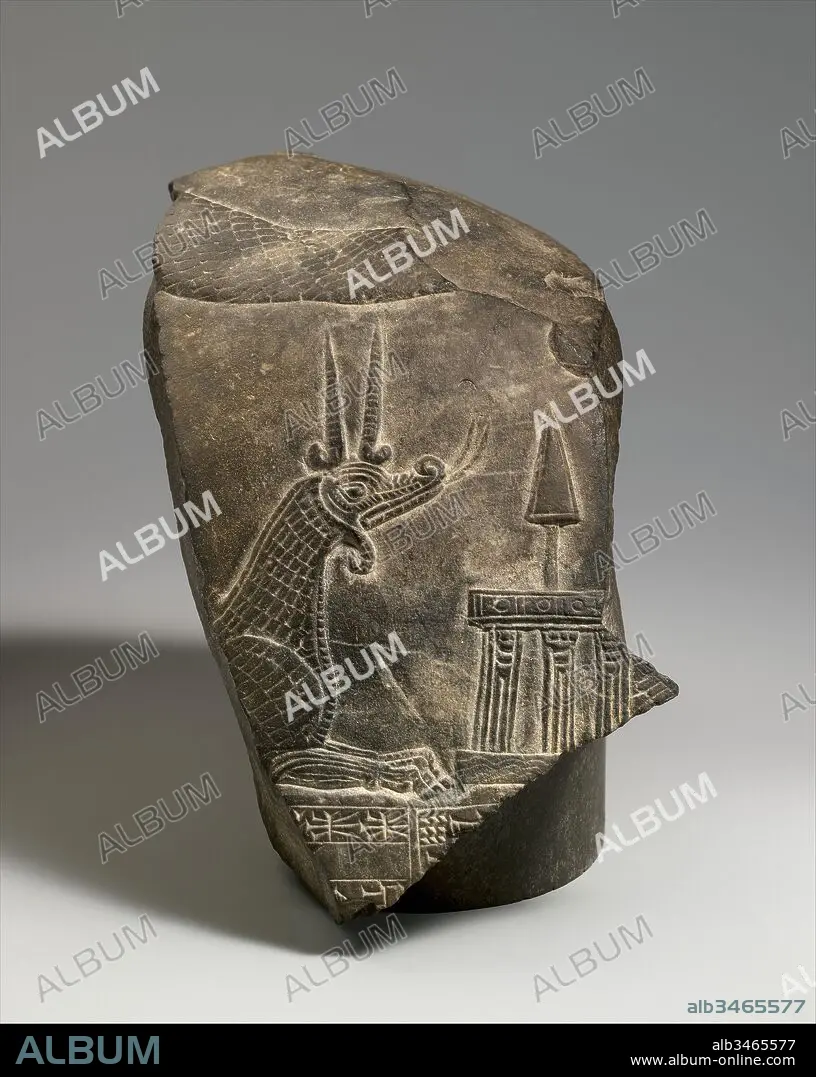
Top fragment of a kudurru with a mushhushshu dragon and divine symbols, Second Dynasty of Isin, ca. 1156–1025 B.C., Mesopotamia, Limestone, H. 6 1/2 x W. 4 x D. 7 1/4 in. (16.5 x 10 x 18.4 cm), Stone-Sculpture-Inscribed, Known as kudurrus or narus, a distinctive group of Babylonian stone monuments were once thought to be boundary markers placed in fields. In fact they are more likely to have been placed in temples, where their contents were preserved and sanctified.
| Partager |
|---|
 Pinterest Pinterest |
 Twitter Twitter |
 Facebook Facebook |
 Copier le lien Copier le lien |
 Email Email |
|
Ajouter à une autre Lightbox |
|
Ajouter à une autre Lightbox |


Avez-vous déjà un compte? S'identifier
Vous n'avez pas de compte ? S'inscrire
Acheter cette image.
Sélectionnez l'usage:

Légende: Voir la traduction automatique
Top fragment of a kudurru with a mushhushshu dragon and divine symbols, Second Dynasty of Isin, ca. 1156–1025 B.C., Mesopotamia, Limestone, H. 6 1/2 x W. 4 x D. 7 1/4 in. (16.5 x 10 x 18.4 cm), Stone-Sculpture-Inscribed, Known as kudurrus or narus, a distinctive group of Babylonian stone monuments were once thought to be boundary markers placed in fields. In fact they are more likely to have been placed in temples, where their contents were preserved and sanctified
Top fragment of a kudurru with a mushhushshu dragon and divine symbols, Second Dynasty of Isin, ca. 1156–1025 B.C., Mesopotamia, Limestone, H. 6 1/2 x W. 4 x D. 7 1/4 in. (16.5 x 10 x 18.4 cm), Stone-Sculpture-Inscribed, Known as kudurrus or narus, a distinctive group of Babylonian stone monuments were once thought to be boundary markers placed in fields. In fact they are more likely to have been placed in temples, where their contents were preserved and sanctified
Crédit: Album / quintlox
Autorisations: ? Autorisation de modèle: Non - ? Autorisation de propriété: Non
Questions sur les droits?
Questions sur les droits?
Taille de l'image: 3995 × 5014 px | 57.3 MB
Taille d'impression: 33.8 × 42.5 cm | 1572.8 × 1974.0 in (300 dpi)
Mots clés: ANT. OR.: MESOPOTAMIE • KUDURRU • MÉSOPOTAMIE • MESOPOTAMIE, ANT. OR.
