

alb3940739
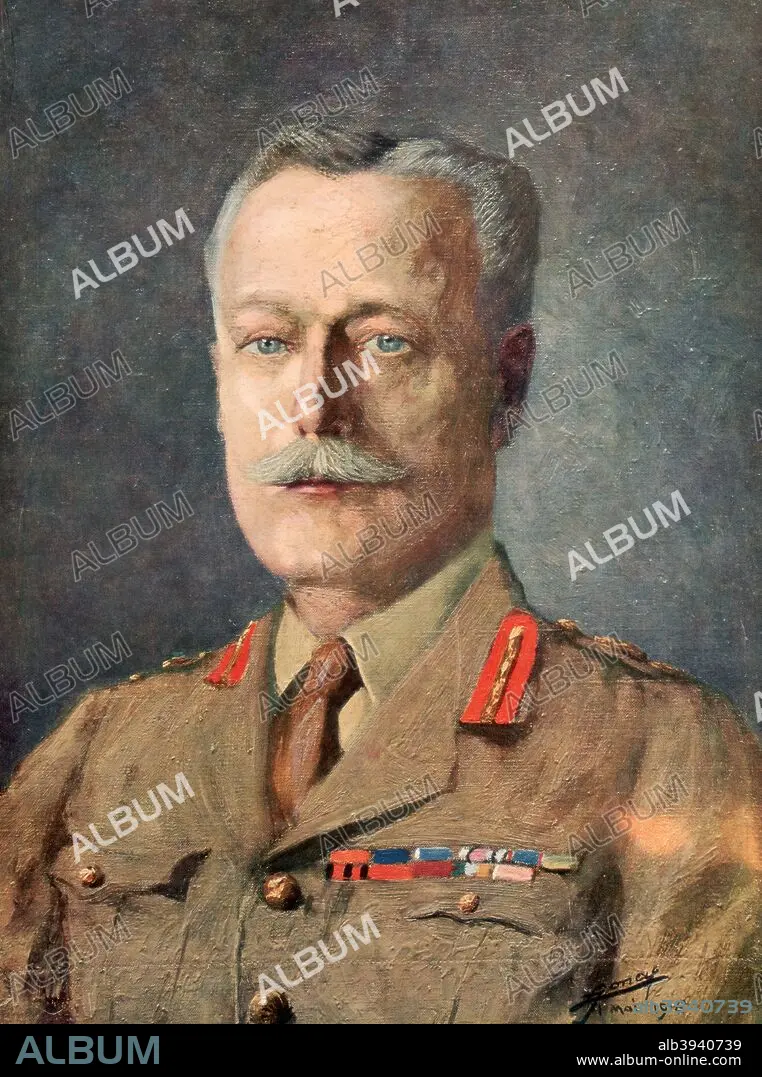
Field Marshal Douglas Haig, British soldier and senior commander during World War I, (1926). Artist: Unknown
| Partager |
|---|
 Pinterest Pinterest |
 Twitter Twitter |
 Facebook Facebook |
 Copier le lien Copier le lien |
 Email Email |
|
Ajouter à une autre Lightbox |
|
Ajouter à une autre Lightbox |


Avez-vous déjà un compte? S'identifier
Vous n'avez pas de compte ? S'inscrire
Acheter cette image.
Sélectionnez l'usage:

Titre: Field Marshal Douglas Haig, British soldier and senior commander during World War I, (1926). Artist: Unknown
Légende: Voir la traduction automatique
Field Marshal Douglas Haig, British soldier and senior commander during World War I, (1926). Haig (1861-1928) was commander of the 1st Army Corps of the British Expeditionary Force (BEF) at the outbreak of the war. His troops fought with distinction at Mons and the First Battle of Ypres. In 1915 Haig was promoted to Commander in Chief of the BEF, a post he held until the end of the war. His conduct of the war on the Western Front was controversial. On the one hand, his pursuit of a strategy of attrition and planning of offensives which ultimately made minimal territorial gains at the cost of massive casualties, as at the Somme (1916) and Passchendaele (1917), earned him the nickname 'Butcher Haig'. General John J Pershing, commander of the US army in France, described Haig as the man who won the war, however. He was made a Field Marshal in 1917, and after the war served as Commander-in-Chief of Home Forces until 1921.
Field Marshal Douglas Haig, British soldier and senior commander during World War I, (1926). Haig (1861-1928) was commander of the 1st Army Corps of the British Expeditionary Force (BEF) at the outbreak of the war. His troops fought with distinction at Mons and the First Battle of Ypres. In 1915 Haig was promoted to Commander in Chief of the BEF, a post he held until the end of the war. His conduct of the war on the Western Front was controversial. On the one hand, his pursuit of a strategy of attrition and planning of offensives which ultimately made minimal territorial gains at the cost of massive casualties, as at the Somme (1916) and Passchendaele (1917), earned him the nickname 'Butcher Haig'. General John J Pershing, commander of the US army in France, described Haig as the man who won the war, however. He was made a Field Marshal in 1917, and after the war served as Commander-in-Chief of Home Forces until 1921.
Crédit: Album / The Print Collector / Heritage Images
Autorisations: ? Autorisation de modèle: Non - ? Autorisation de propriété: Non
Questions sur les droits?
Questions sur les droits?
Taille de l'image: 3609 × 4850 px | 50.1 MB
Taille d'impression: 30.6 × 41.1 cm | 1420.9 × 1909.4 in (300 dpi)
Mots clés: ANNEES 1910 • ARMEE • ARMÉEE • ARMÉES • BONHOMME • COMMANDANT • COULEUR • ECOSSAIS • ECOSSE • FRONT DE L'OUEST • GÉNÉRAL CONFÉDÉRÉ • GENERAL • GÉNÉRAUX • GNERAL • GRANDE GUERRE • GUERRE 14-18 • GUERRE 1914-1918 • GUERRE MONDIALE I • GUERRE • HOMME • OFFICIER DE COMMANDEMENT • PORTAIT • PORTRAIT • POTRAIT • PREMIERE GUERRE MONDIALE (1914-1918) • PREMIERE GUERRE MONDIALE • SOLDATS
