

alb5413031
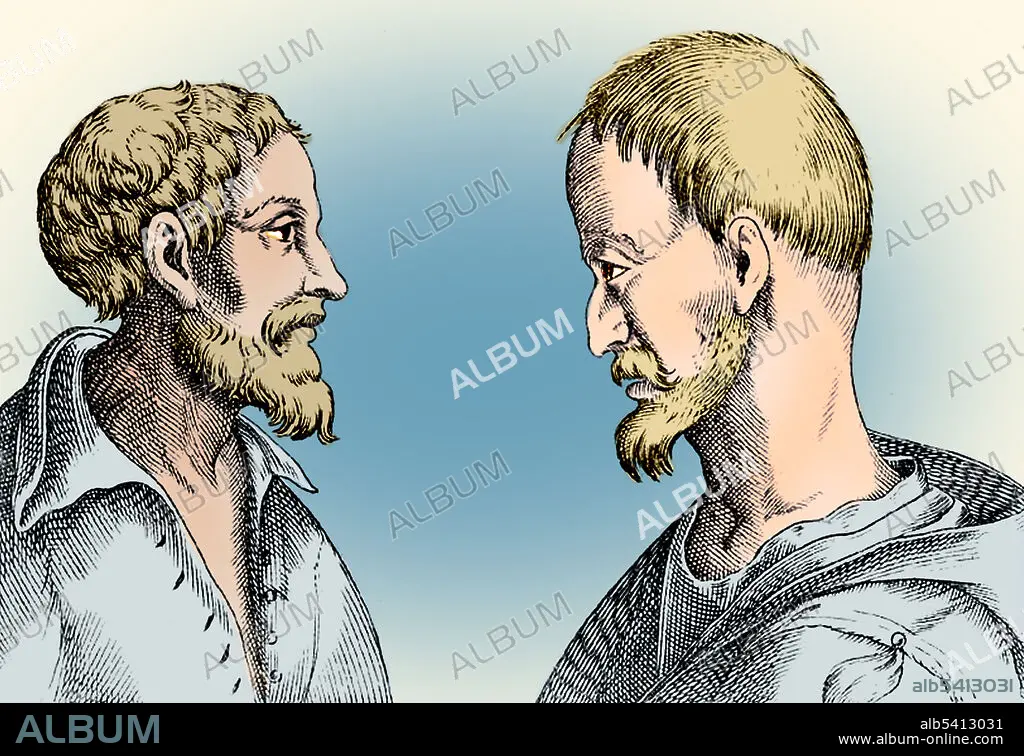
Giambattista della Porta, Physiognomy, 1586
| Partager |
|---|
 Pinterest Pinterest |
 Twitter Twitter |
 Facebook Facebook |
 Copier le lien Copier le lien |
 Email Email |
|
Ajouter à une autre Lightbox |
|
Ajouter à une autre Lightbox |


Avez-vous déjà un compte? S'identifier
Vous n'avez pas de compte ? S'inscrire
Acheter cette image.
Sélectionnez l'usage:

Titre: Giambattista della Porta, Physiognomy, 1586
Légende:
Traduction automatique: La physionomie, ou la notion selon laquelle le tempérament et le caractère d'une personne peuvent être déduits de la forme de son visage ou de son corps, a été proposée pour la première fois par des philosophes et des médecins grecs classiques, et Aristote a beaucoup écrit sur ce concept. À la Renaissance, la science de la physionomie s’est combinée à l’astrologie pour devenir plutôt complexe. Giambattista della Porta (1535, 4 février 1615) était un érudit, mathématicien et dramaturge italien qui vivait à Naples à l'époque de la Révolution scientifique et de la Réforme. Son ouvrage, De humana physiognomonia, publié en 1586, tentait de défendre la physionomie et contenait de nombreuses illustrations. Le sérieux avec lequel les médecins formés de l'époque ont pris les arguments de Porta est discutable, mais la physionomie est apparue à maintes reprises dans la littérature médicale.
Physiognomy, or the notion that a person's temperament and character can be deduced from the shape of his or her face or body, was first proposed by Classical Greek philosophers and physicians, and Aristotle wrote about the concept extensively. By the Renaissance, the science of physiognomy had been combined with astrology to become rather complex. Giambattista della Porta (1535, February 4, 1615) was an Italian scholar, polymath and playwright who lived in Naples at the time of the Scientific Revolution and Reformation. His work, De humana physiognomonia, published in 1586, attempted to make a strong case for physiognomy, and contained numerous illustrations. How seriously trained physicians of the time took Porta's arguments is debatable, but physiognomy has appeared again and again in the medical literature.
Crédit: Album / Science Source
Autorisations: ? Autorisation de modèle: Non - ? Autorisation de propriété: Non
Questions sur les droits?
Questions sur les droits?
Taille de l'image: 4332 × 2976 px | 36.9 MB
Taille d'impression: 36.7 × 25.2 cm | 1705.5 × 1171.7 in (300 dpi)
Mots clés: 16E SIECLE • 16EME S • CARACTÈRE • CÉLÈBRE • CELEBRITE • EUROPÉEN • HOMME • HUMAIN • ILLUSTRATION • ITALIE • PERSONNAGES • PERSONNALITÉS • PERSONNE • REVOLUTION • SEIZIÈME SIÈCLE • XVIE SIECLE
