

alb3806904
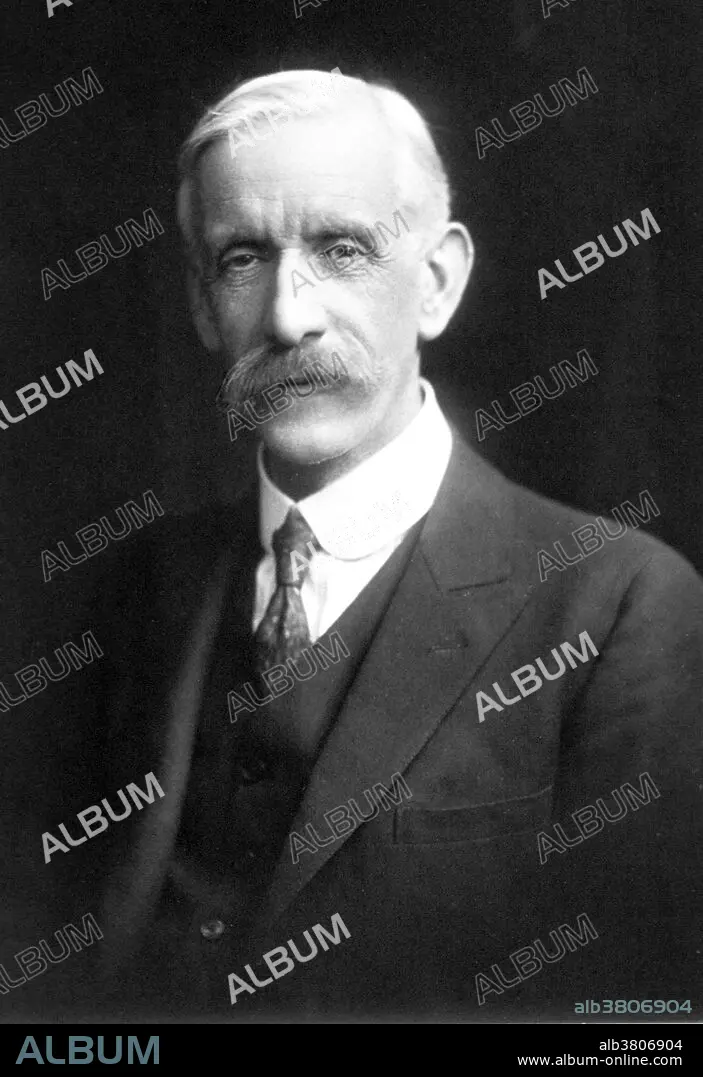
Frederick Gowland Hopkins, English Biochemist
| Partager |
|---|
 Pinterest Pinterest |
 Twitter Twitter |
 Facebook Facebook |
 Copier le lien Copier le lien |
 Email Email |
|
Ajouter à une autre Lightbox |
|
Ajouter à une autre Lightbox |


Avez-vous déjà un compte? S'identifier
Vous n'avez pas de compte ? S'inscrire
Acheter cette image.
Sélectionnez l'usage:

Titre: Frederick Gowland Hopkins, English Biochemist
Légende: Voir la traduction automatique
Frederick Gowland Hopkins (1861-1947) was an English biochemist. He taught physiology and toxicology at Guy's Hospital from 1894 to 1898. He discovered the amino acid tryptophan, in 1901. Hopkins studied how cells obtain energy via a complex metabolic process of oxidation and reduction reactions. His study in 1907 with Sir Walter Morley Fletcher of the connection between lactic acid and muscle contraction was one of the central achievements of his work on the biochemistry of the cell. In 1912 Hopkins published the work for which he is best known, demonstrating in a series of animal feeding experiments that diets consisting of pure proteins, carbohydrates, fats, minerals, and water fail to support animal growth. Hopkins is credited with the discovery and characterization in 1921 of glutathione extracted from various animal tissues. He was awarded the Nobel Prize in Physiology or Medicine in 1929, with Christiaan Eijkman, for the discovery of vitamins. He was appointed President of the Royal Society from 1930 to 1935. He lived to be 85 and died of natural causes.
Frederick Gowland Hopkins (1861-1947) was an English biochemist. He taught physiology and toxicology at Guy's Hospital from 1894 to 1898. He discovered the amino acid tryptophan, in 1901. Hopkins studied how cells obtain energy via a complex metabolic process of oxidation and reduction reactions. His study in 1907 with Sir Walter Morley Fletcher of the connection between lactic acid and muscle contraction was one of the central achievements of his work on the biochemistry of the cell. In 1912 Hopkins published the work for which he is best known, demonstrating in a series of animal feeding experiments that diets consisting of pure proteins, carbohydrates, fats, minerals, and water fail to support animal growth. Hopkins is credited with the discovery and characterization in 1921 of glutathione extracted from various animal tissues. He was awarded the Nobel Prize in Physiology or Medicine in 1929, with Christiaan Eijkman, for the discovery of vitamins. He was appointed President of the Royal Society from 1930 to 1935. He lived to be 85 and died of natural causes.
Crédit: Album / NLM/Science Source
Autorisations: ? Autorisation de modèle: Non - ? Autorisation de propriété: Non
Questions sur les droits?
Questions sur les droits?
Taille de l'image: 2700 × 3934 px | 30.4 MB
Taille d'impression: 22.9 × 33.3 cm | 1063.0 × 1548.8 in (300 dpi)
Mots clés: BIOCHIMIE • BIOCHIMISTE • CÉLÈBRE • CELEBRITE • EUROPÉEN • HOMME • LAUREAT DU PRIX NOBEL • NOBEL • PERSONNAGES • PERSONNALITÉS • PERSONNE • PHYSIOLOGIE • PORTAIT • PORTRAIT • POTRAIT • PRIX NOBEL • XXE SIECLE
