

alb9103945
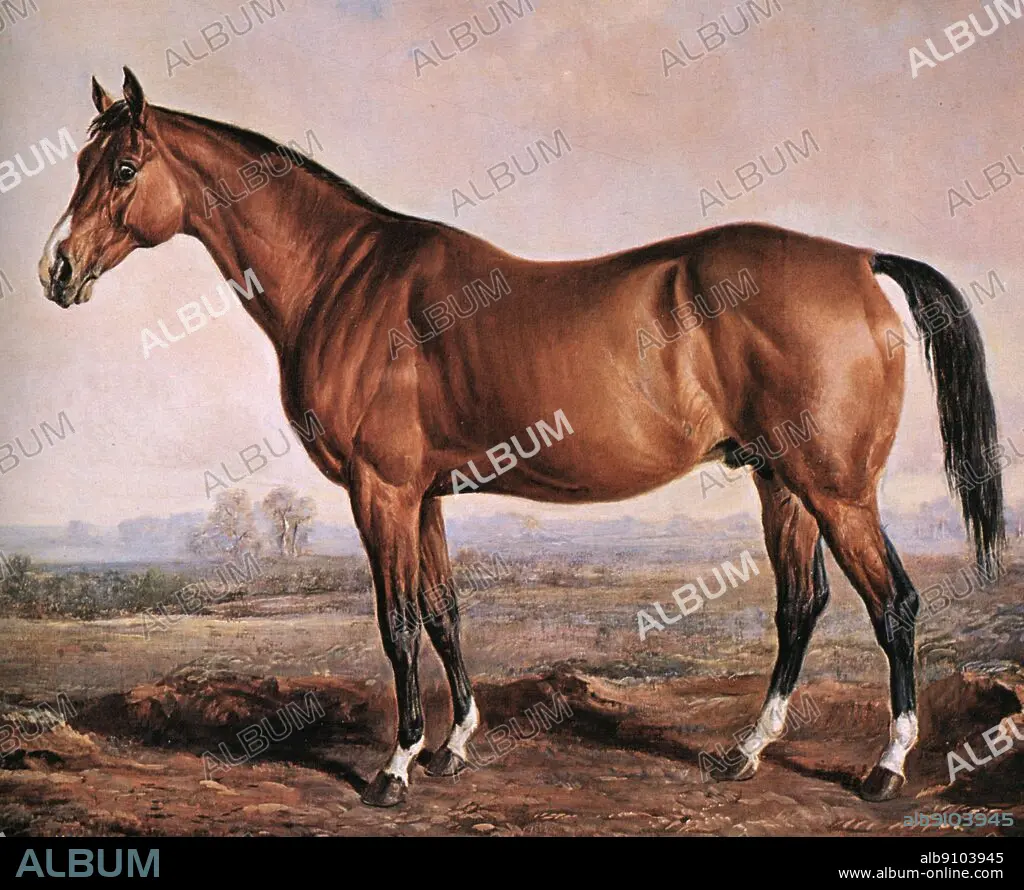
The famous race horse, Lexington, was born in 1850, stood 15 hands (63 inches), 3 inches high, and on April 2, 1855, set a record at the Metaire Course in New Orleans by running 4 miles in 7 minutes, 19 3/4 seconds.. He was the best horse bred in America in the 19th century. Like Man O' War 67 years later, he represented an exceptionally long-established American male line, although there was much recently-imported blood close up in his pedigree. He had limitless stamina and courage, and also the pulverizing speed which enabled him to distance his opponents in many het-races. He became one of the greatest sires of winners in racing history. Perhaps his greatest fame was as sire to numerous blood mares and successful racers, one of whom was Preakness, namesake of the classic race at Pimlico. Lexington died July 1, 1875, at Woodburn Farm, Woodford County, Kentucky. In 1878, his owner, A.J. Alexander, through the auspices of Dr. J.M. Toner, donated the horse's bones to the United States National Museum. The History of Horse Racing by Roger Longrigg, page 217.
| Partager |
|---|
 Pinterest Pinterest |
 Twitter Twitter |
 Facebook Facebook |
 Copier le lien Copier le lien |
 Email Email |
|
Ajouter à une autre Lightbox |
|
Ajouter à une autre Lightbox |


Avez-vous déjà un compte? S'identifier
Vous n'avez pas de compte ? S'inscrire
Acheter cette image.
Sélectionnez l'usage:

Titre: The famous race horse, Lexington, was born in 1850, stood 15 hands (63 inches), 3 inches high, and on April 2, 1855, set a record at the Metaire Course in New Orleans by running 4 miles in 7 minutes, 19 3/4 seconds.. He was the best horse bred in America in the 19th century. Like Man O' War 67 years later, he represented an exceptionally long-established American male line, although there was much recently-imported blood close up in his pedigree. He had limitless stamina and courage, and also the pulverizing speed which enabled him to distance his opponents in many het-races. He became one of the greatest sires of winners in racing history. Perhaps his greatest fame was as sire to numerous blood mares and successful racers, one of whom was Preakness, namesake of the classic race at Pimlico. Lexington died July 1, 1875, at Woodburn Farm, Woodford County, Kentucky. In 1878, his owner, A.J. Alexander, through the auspices of Dr. J.M. Toner, donated the horse's bones to the United States National Museum. The History of Horse Racing by Roger Longrigg, page 217.
Légende: Voir la traduction automatique
The famous race horse, Lexington, was born in 1850, stood 15 hands (63 inches), 3 inches high, and on April 2, 1855, set a record at the Metaire Course in New Orleans by running 4 miles in 7 minutes, 19 3/4 seconds.. He was the best horse bred in America in the 19th century. Like Man O' War 67 years later, he represented an exceptionally long-established American male line, although there was much recently-imported blood close up in his pedigree. He had limitless stamina and courage, and also the pulverizing speed which enabled him to distance his opponents in many het-races. He became one of the greatest sires of winners in racing history. Perhaps his greatest fame was as sire to numerous blood mares and successful racers, one of whom was Preakness, namesake of the classic race at Pimlico. Lexington died July 1, 1875, at Woodburn Farm, Woodford County, Kentucky. In 1878, his owner, A.J. Alexander, through the auspices of Dr. J.M. Toner, donated the horse's bones to the United States National Museum. The History of Horse Racing by Roger Longrigg, page 217.
The famous race horse, Lexington, was born in 1850, stood 15 hands (63 inches), 3 inches high, and on April 2, 1855, set a record at the Metaire Course in New Orleans by running 4 miles in 7 minutes, 19 3/4 seconds.. He was the best horse bred in America in the 19th century. Like Man O' War 67 years later, he represented an exceptionally long-established American male line, although there was much recently-imported blood close up in his pedigree. He had limitless stamina and courage, and also the pulverizing speed which enabled him to distance his opponents in many het-races. He became one of the greatest sires of winners in racing history. Perhaps his greatest fame was as sire to numerous blood mares and successful racers, one of whom was Preakness, namesake of the classic race at Pimlico. Lexington died July 1, 1875, at Woodburn Farm, Woodford County, Kentucky. In 1878, his owner, A.J. Alexander, through the auspices of Dr. J.M. Toner, donated the horse's bones to the United States National Museum. The History of Horse Racing by Roger Longrigg, page 217.
Crédit: Album / TopFoto
Autorisations: ? Autorisation de modèle: Non - ? Autorisation de propriété: Non
Questions sur les droits?
Questions sur les droits?
Taille de l'image: 3502 × 2864 px | 28.7 MB
Taille d'impression: 29.7 × 24.2 cm | 1378.7 × 1127.6 in (300 dpi)
Mots clés: AMÉRICAIN • CÉLÈBRE • CELEBRITE • COURSE DE CHEVAUX • COURSE HIPPIQUE • ELEVAGE DE CHEVAUX • ÉQUESTRE • VAINQUEUR
